
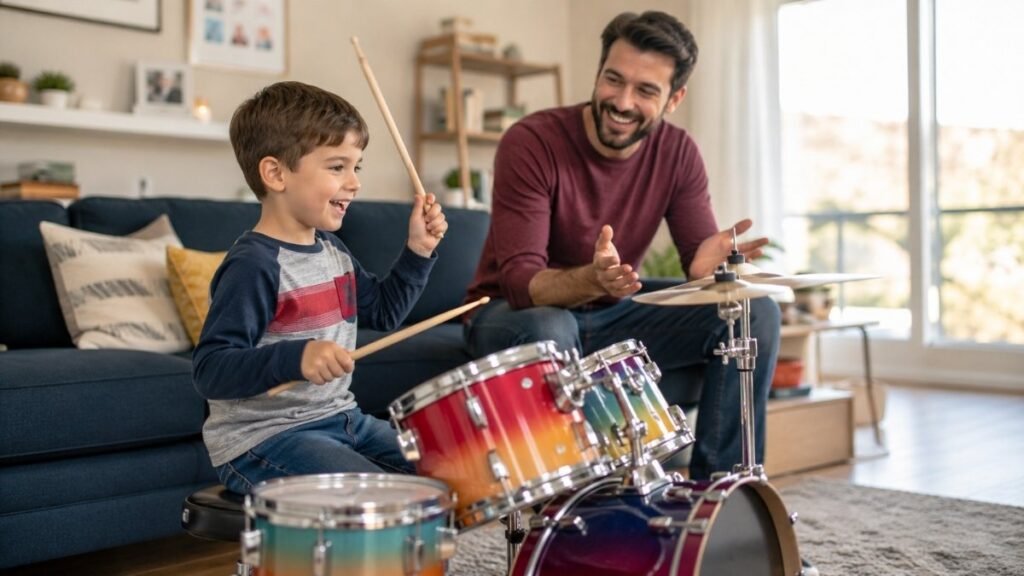
A kids drum set should fit more than your child’s interest—it should fit their age, size, and your home, too. With so many toy drums, junior kits, and electronic sets available, it’s easy to buy one that’s either too large, too loud, or too advanced for a beginner. Choosing the right fit early makes learning more comfortable and keeps practice fun. In this guide, you’ll learn how to choose the right drum set by age, compare acoustic and electronic options, and spend your budget where it matters most.
Overview: What Actually Makes a Drum Set “Best” for Kids
There isn’t one universal “best” kids drum set — the right choice depends on your child’s age, your living situation, your noise tolerance, and how serious their interest in drumming actually is. Price alone rarely tells you whether a kit is a good fit.
Before comparing specific products, it helps to be honest about a few things:
- Sizing — will your child comfortably reach the pedals and drums, or will they be stretching for the next two years?
- Noise — will an acoustic kit work in your home, or does an apartment (and patient neighbors) call for something quieter?
- Safety — is the kit sturdy, stable, and appropriate for young hands and ears?
- Durability — will it hold up to enthusiastic, uneven beginner playing?
- Actual interest — is this a passing curiosity or a real spark worth investing in?
This guide covers all five, in the order they typically matter most.
Quick Answer: Which Kids Drum Set Should You Buy?
Toddlers do best with a simple rhythm toy or tabletop drum pad, preschoolers benefit from a compact junior kit, and older kids (6–10) are ready for either a junior acoustic or electronic kit depending on your home’s noise tolerance.
| Age | Recommended Type | Why |
|---|---|---|
| Toddlers (1–3) | Rhythm toy or tabletop drum pad | Builds rhythm sense without full-size hardware |
| Ages 3–5 | Compact junior drum kit | Sized for small reach, introduces real drumming basics |
| Ages 6–10 | Junior acoustic or electronic kit | Depends on noise tolerance and living situation |
| Apartment living | Electronic mesh-head kit | Quiet practice, headphone-compatible |
| Detached home | Junior acoustic kit | Authentic feel and sound, fewer noise restrictions |
| Unsure if it’ll stick | Quality used beginner kit | Lower cost, easy to resell if interest fades |
If you’re still working out what fits your child’s stage more broadly, our guide to best toys for 1-year-olds and best toys for 2-year-olds covers rhythm and musical toys alongside other developmental picks for that age range.
Acoustic vs. Electronic Kids Drum Set: Which Is Better?
Acoustic kits offer a more authentic playing feel and are usually better for houses with more noise tolerance, while electronic kits are quieter, headphone-compatible, and better suited to apartments or shared walls.
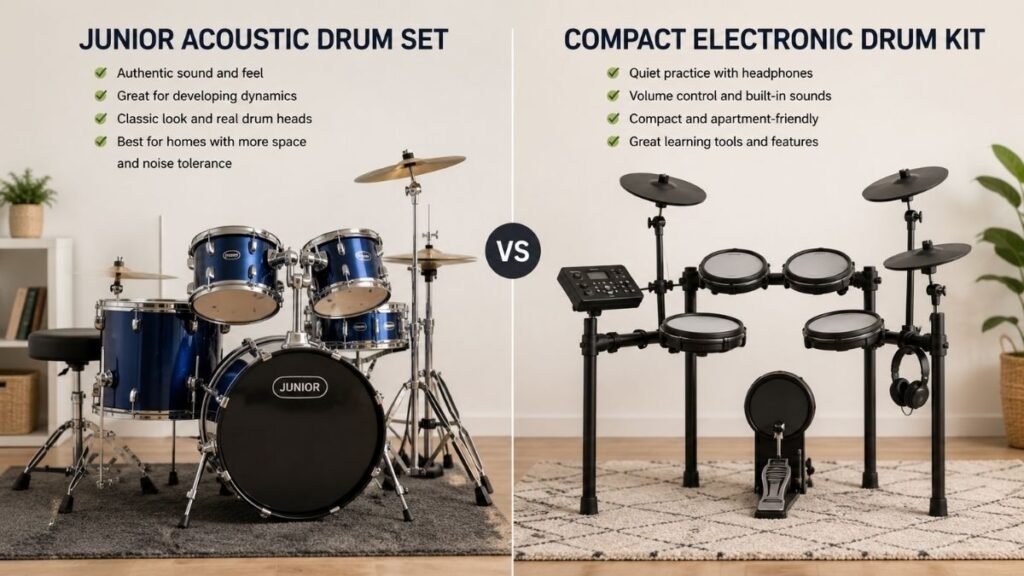
Acoustic vs. electronic, at a glance
Acoustic drum sets produce real, resonant sound and give beginners an authentic feel for dynamics — hitting harder genuinely sounds louder, which helps develop a natural sense of control. Electronic kits use mesh or rubber pads that trigger sound through a module, meaning volume can be adjusted or muted entirely, and headphones can replace speakers for silent practice.
When an acoustic kit is the better choice
An acoustic kit tends to make more sense in a detached home, a basement, or any space where noise isn’t a major concern. Many parents also find that kids respond more naturally to a real acoustic kit — the physical vibration and resonance is part of what makes drumming satisfying in the first place.
When an electronic kit makes more sense
An electronic kit is usually the better fit for apartments, townhomes, or any household with close neighbors or nearby napping siblings. Beyond volume control, most electronic kits also offer built-in practice features like metronomes and recorded lessons, which can be genuinely useful for a young beginner.
Acoustic vs. Electronic Drum Set Comparison
| Factor | Acoustic Kit | Electronic Kit |
|---|---|---|
| Sound | Authentic, resonant | Adjustable, can be silenced |
| Noise level | Moderate to loud | Low, headphone-compatible |
| Playing feel | More natural dynamics | Consistent, sometimes less responsive |
| Best for | Houses, less noise-sensitive homes | Apartments, shared walls |
| Maintenance | Occasional tuning, head replacement | Minimal, mostly electronic upkeep |
| Long-term learning value | Strong for developing dynamics | Strong for quiet, consistent practice |
Electronic drums aren’t actually silent. The sticks still make a distinct clacking sound against the pads, and the kick pedal can create noticeable vibration through the floor — especially in apartments with hardwood or thin flooring. If quiet practice is the main goal, it’s worth pairing an electronic kit with a drum mat or isolation pad rather than assuming the kit alone will solve the noise concern.
Choosing the Right Kids Drum Set Size by Age
Match the kit to your child’s current height and reach, not the age printed on the box — a rhythm toy suits ages 1–3, a compact junior kit fits ages 3–5, and a properly sized junior kit works well through ages 6–10.
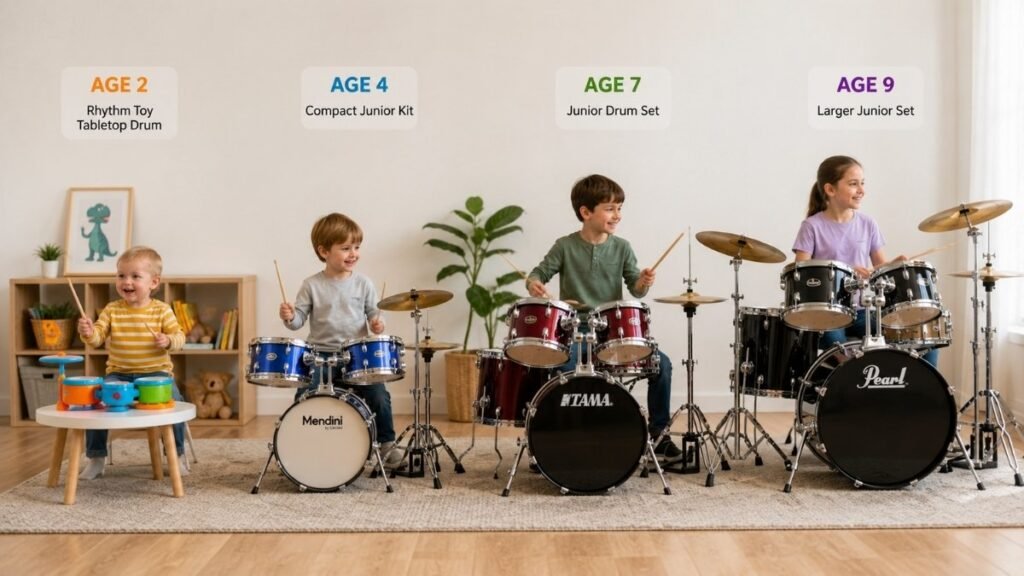
Ages 1–3
At this stage, a simple rhythm toy or tabletop drum pad is genuinely more appropriate than a full kit. Toddlers are still developing basic coordination, and a full-size drum set — even a “junior” one — is usually too large and too complex to be useful yet.
Ages 3–5
A compact junior drum kit, scaled down in both height and drum size, is typically the right fit here. At this age, kids are ready to start understanding basic rhythm and hand-foot coordination, but still need a kit built specifically for smaller bodies.
Ages 6–8
Most children in this range are ready for a properly sized junior acoustic or electronic kit with adjustable hardware. This is often the age where genuine interest starts to show, making it a reasonable point to invest a bit more if the child has shown consistent enthusiasm.
Ages 8–10
Kids in this age range can often transition toward a slightly larger beginner kit, sometimes closer to a scaled-down adult configuration, especially if they’ve been playing consistently for a year or more.
Kids Drum Set Size Guide by Age
| Age | Kit Type | Key Sizing Signs |
|---|---|---|
| 1–3 | Rhythm toy / tabletop pad | No pedals needed; focus on hand rhythm |
| 3–5 | Compact junior kit | Child can sit comfortably with feet supported |
| 6–8 | Junior acoustic/electronic kit | Pedals reachable without stretching |
| 8–10 | Larger beginner kit | Consistent playing history, room to grow |
An oversized kit doesn’t actually help a child “grow into” drumming faster — it usually does the opposite. If a child has to stretch to reach the pedals or can’t sit comfortably on the throne, the extra effort tends to create frustration rather than motivation, and interest often fades before the child gets a real chance to enjoy playing.
Kids Drum Set Noise and Safety Tips
Protect young ears with proper hearing protection during acoustic practice, and reduce household noise using mute pads, low-volume cymbals, isolation mats, or an electronic kit with headphones.
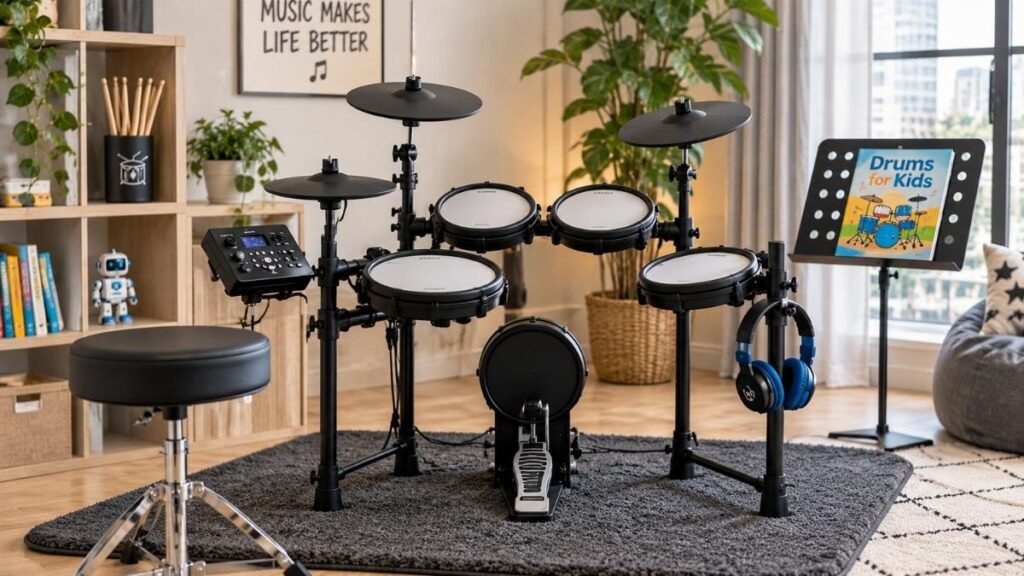
Hearing protection
Even at moderate volumes, drum practice can expose young ears to sustained sound levels worth protecting against, especially during longer practice sessions. Child-sized ear protection designed for loud environments is a simple, inexpensive way to reduce that risk without limiting how a child plays.
Apartment noise solutions
For families in apartments or attached homes, a few practical adjustments can make a real difference: mute pads placed over acoustic drum heads, low-volume cymbals designed specifically for practice, and a drum isolation mat under the entire kit to reduce vibration transfer to the floor below.
Safe practice habits
Shorter, more frequent practice sessions tend to be both safer for developing hearing and more effective for building consistent skill than long, infrequent sessions.
Kids Drum Noise & Safety Checklist
- [ ] Child wears appropriate hearing protection during acoustic practice
- [ ] Practice sessions are kept to a reasonable length, especially for younger kids
- [ ] Mute pads or low-volume cymbals are used if noise is a concern
- [ ] An isolation mat is placed under the kit to reduce floor vibration
- [ ] Practice times are considerate of shared walls or napping siblings
One thing that catches many parents off guard: it’s not just the drums themselves that carry through a building — the kick pedal often transmits low-frequency vibration through the floor, which can be more noticeable to downstairs neighbors than the actual drum sound is to the people in the room. An isolation mat placed under the entire kit addresses this far more effectively than simply lowering cymbal volume alone.
What to Look for in a Kids Drum Set
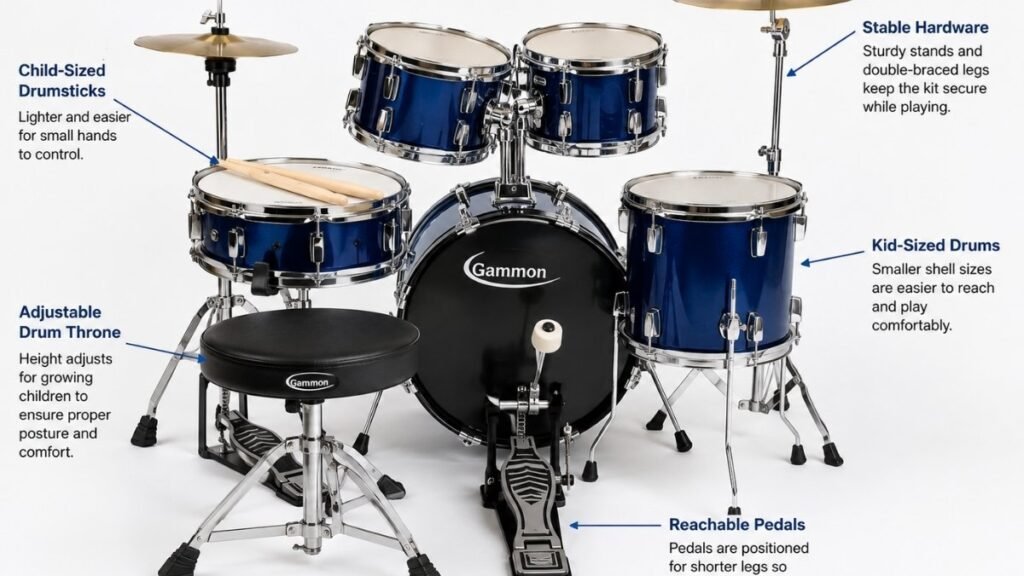
Prioritize stable hardware, an adjustable throne, reachable pedals, and durable construction — extras like flashy finishes or oversized cymbal packs matter far less for a beginner.
Essential features
Stability matters more than almost anything else for a young beginner. A kit with wobbly stands or a throne that won’t stay adjusted will frustrate a child far faster than any missing accessory. An adjustable throne and reachable pedals are non-negotiable for comfortable, sustainable practice.
Must-have accessories
Child-sized drumsticks, a properly fitted throne, and — for electronic kits — a headphone output are worth confirming before purchase, since these are sometimes sold separately or excluded from “starter” bundles.
Features you can skip
Extra cymbals, oversized kits, or premium finishes rarely matter for a true beginner. These add cost without adding much genuine value until a child has been playing consistently for a year or more.
Kids Drum Set Buying Checklist
- [ ] Hardware feels stable, not wobbly, when assembled
- [ ] Throne height is adjustable to the child’s current size
- [ ] Pedals are within comfortable reach without stretching
- [ ] Drumsticks sized for small hands are included
- [ ] Headphone output is included (for electronic kits)
- [ ] Replacement parts are available if something wears out
Opening the box only to discover the throne, drumsticks, or — for electronic kits — the power adapter wasn’t actually included. It’s worth double-checking the full contents list before buying, since “starter kit” doesn’t always mean everything needed to start playing is in the box.
Kids Drum Set Budget Guide
Budget kits under $100 work well for testing genuine interest, $100–$200 covers most solid junior kits, and $200–$350 is reasonable once a child has shown consistent, ongoing interest.
Under $100: This range typically includes simple rhythm toys, tabletop pads, or very basic junior kits — a reasonable starting point if you’re not yet sure how serious the interest is.
$100–$200: Most well-built junior acoustic or entry-level electronic kits fall here, offering a solid balance of durability and playability for a beginner who seems genuinely interested.
$200–$350: This tier usually includes better hardware, more responsive pads or heads, and additional features like built-in lessons — worth considering once a child has been playing consistently for several months or longer.
Kids Drum Set Budget Guide
| Budget | What You Typically Get | Best For |
|---|---|---|
| Under $100 | Rhythm toys, tabletop pads, basic kits | Testing initial interest |
| $100–$200 | Solid junior acoustic/electronic kits | Most beginners with steady interest |
| $200–$350 | Better hardware, more features | Kids with consistent, ongoing interest |
New kits aren’t the only reasonable option. If you’re unsure whether your child’s interest will last, a quality used beginner kit can be a genuinely smart choice — it’s lower risk, often just as functional as new, and easy to resell if drumming turns out to be a passing phase rather than a lasting one. Hidden costs are worth watching for either way: replacement drumsticks, drum heads, and — for electronic kits — cables or adapters can add up if they aren’t included upfront.
Setting Up a Kids Drum Set the Right Way
Adjust the throne and pedals to your child’s current size, keep the setup stable and cable-free, and build a short, consistent practice routine rather than relying on the kit alone to sustain interest.
Proper setup
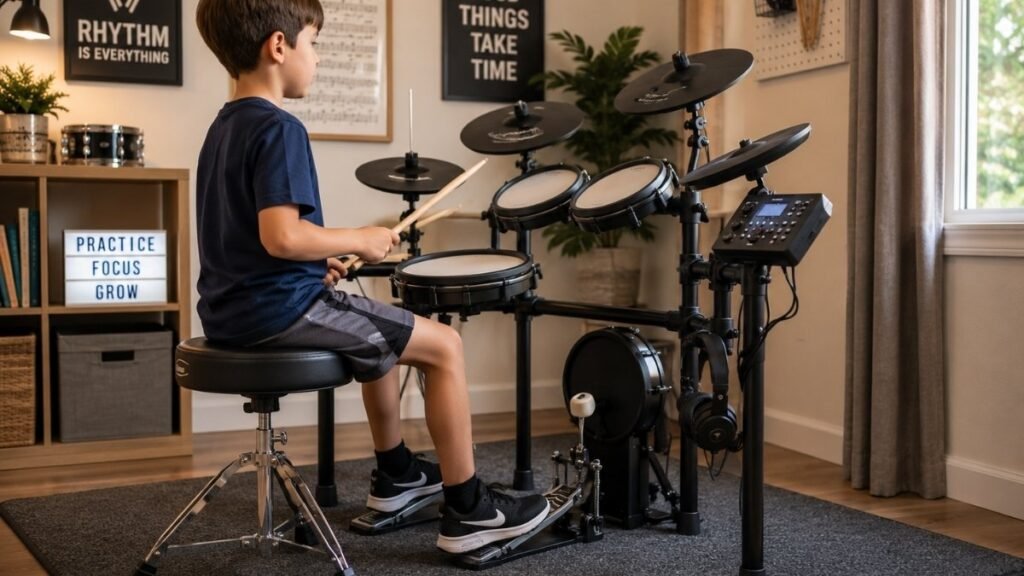
Throne height should let your child sit with their knees at a comfortable angle, not stretched or cramped. Drums and pedals should be positioned so nothing requires excessive reaching, and cables — for electronic kits — should be tucked away from small feet to avoid tripping hazards.
First month practice plan
Short, frequent sessions — even just 10 to 15 minutes a few times a week — tend to build consistency far better than occasional long sessions. Many families find it helpful to treat the first month as exploration rather than formal practice, letting the child get comfortable before introducing any structure.
Keeping kids interested
Simple rhythm games, along-with-a-song practice, or short recorded lesson features (common on many electronic kits) tend to keep beginners engaged longer than repetitive drills. If interest is holding steady after a few months, that’s often a good signal it may be worth exploring formal lessons.
10-Minute Drum Setup Checklist
- [ ] Throne is adjusted to a comfortable seated height
- [ ] Pedals are within easy reach without stretching
- [ ] All hardware is tightened and stable
- [ ] Cables are tucked away from walking paths (electronic kits)
- [ ] A short first practice session is planned, not a long one
A properly adjusted kit tends to feel noticeably easier and more enjoyable to a young beginner right away, even before any real skill develops. Many parents notice that a five-minute adjustment — lowering the throne, moving a pedal closer — makes the difference between a child who wants to keep playing and one who loses interest within the first week.
Frequently Asked Questions
Should I buy an acoustic or electronic drum set for a young child? It depends mainly on your home. Acoustic kits offer a more authentic feel and work well in houses with reasonable noise tolerance, while electronic kits are better suited to apartments or shared walls thanks to volume control and headphone practice.
What size drum kit is right for a 2- to 5-year-old toddler? For ages 1–3, a simple rhythm toy or tabletop drum pad is usually the better fit rather than a full kit. Around ages 3–5, a compact junior drum kit sized for smaller bodies becomes appropriate.
Do toddlers need hearing protection when playing acoustic kids’ drums? Yes — even at a toddler’s typical playing volume, hearing protection is a simple and inexpensive way to reduce exposure to sustained sound, especially during longer or more enthusiastic play sessions.
Are cheap plastic toy drum sets worth buying for toddlers? For very young toddlers, a simple, well-made rhythm toy can be genuinely useful for building early rhythm sense, but it’s worth choosing one with sturdy construction rather than the cheapest option available, since flimsy parts can wear out or break quickly under real toddler use.
How can I reduce the noise of a kids’ drum set in an apartment? Mute pads, low-volume cymbals, and a drum isolation mat under the kit are the most effective solutions for acoustic kits, while an electronic kit with headphones offers the most reliable option for consistently quiet practice.
What features should I look for when buying a drum set for an older child aged 6 to 10? Focus on stable hardware, an adjustable throne, reachable pedals, and — for electronic kits — a headphone output. Extra cymbals or premium finishes matter far less than a stable, properly fitted kit at this stage.
How do you properly tune a kids’ junior acoustic drum kit to sound good? Tuning involves evenly tightening the tension rods around each drum head in a star pattern to keep the pitch consistent, then adjusting overall tension until the sound feels balanced rather than overly tight or loose. If this feels unfamiliar, many local music shops offer a quick tuning service or tutorial when the kit is purchased.
Is a tabletop electronic drum pad better than a full drum set for a toddler? For most toddlers, yes — a tabletop pad offers a simpler, appropriately sized way to explore rhythm without the size, cost, or noise commitment of a full kit, making it a practical starting point before moving to a junior kit later.
Final Thoughts
The best kids drum set isn’t the most expensive or the biggest one—it’s the one that fits your child’s age, size, and excitement to learn. A drum kit that feels comfortable and fun is far more likely to be played than one that’s too large or too advanced. Start with a setup that matches where your child is today, not where they’ll be in a few years. If their love of drumming grows, upgrading later is easy. The first kids drum set doesn’t have to be perfect—it just has to inspire them to keep coming back and playing.
🏠 Behind This Guide
Choosing the right kids drum set isn’t about buying the biggest or most expensive kit—it’s about finding one that fits your child’s age, your home, and their enthusiasm for learning.
That’s why this guide focuses on the decisions that matter most before you buy.
This guide is built around three essentials:
- 🥁 Choosing the Right Fit — Matching the drum kit to your child’s age, size, and skill level.
- 🎵 Acoustic vs. Electronic — Understanding the differences in sound, noise, and practice experience.
- 🛡️ Smart Buying Tips — Picking a safe, durable kit without overspending on unnecessary features.
Because the goal isn’t simply to buy a drum set.
It’s to help your child enjoy playing and keep that excitement growing.
🥁 Continue Exploring Fun Ways to Learn Through Play
A kids drum set is just one way to encourage creativity, coordination, and confidence. These beginner-friendly guides can help you discover more toys and activities that support your child’s learning and development.
- Educational Toys for Kids — Explore the best toys that encourage creativity, problem-solving, and hands-on learning for every age.
- Gifts for 3-Year-Olds — Find fun, age-appropriate gift ideas that inspire imagination, movement, and early learning.
- Fine Motor Skills Development — Discover simple toys and everyday activities that help children strengthen coordination and hand control.
- Best Pretend Play Toys — Encourage imaginative play with toys that help children build creativity, communication, and social skills.
- Rainy Day Activities for Kids — Keep children active and entertained indoors with easy, engaging activities for any rainy afternoon.
- Educational Toys: The Complete Guide — Learn how to choose educational toys by age, skill level, and developmental goals.
❤️ A Final Note
The best toddler gifts aren’t always the biggest or the most expensive—they’re the ones children reach for again and again.
At Toizora, we believe every toy should inspire curiosity, support healthy development, and make everyday play a little more meaningful.
Our goal is simple: helping parents and gift-givers choose safe, educational toys with confidence.