
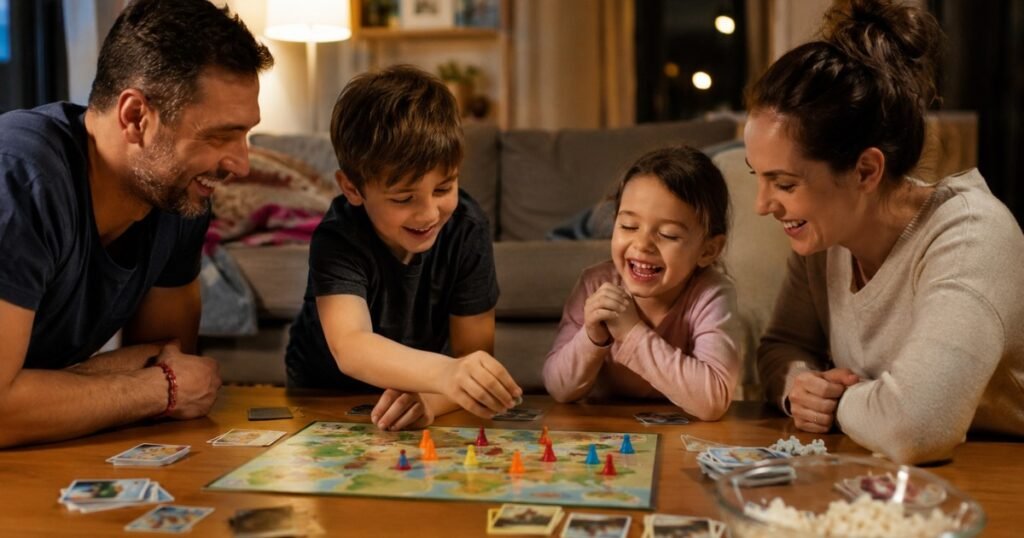
Here’s a scenario I know too well: it’s a Saturday afternoon, the kids are complaining about being bored, and someone suggests a board game. There’s a moment of genuine excitement. You drag out the box. And then — twenty minutes later — someone is crying, someone is cheating, someone has wandered off to find their iPad, and three of the playing pieces have mysteriously disappeared under the couch.
The box goes back on the shelf. Where it will stay for another four months.
This is the real story of most families’ relationship with board games for kids. Not the Instagram version with everyone laughing around the table — the actual version, where the game that looked perfect on the shelf turns out to be either too complicated, too babyish, or finished in twelve minutes and never touched again.
Three things usually go wrong: the game is too complex for the youngest player, too simple for the oldest, or genuinely boring for the adults who have to play it thirty-seven times. Most board game guides don’t address any of this. They recommend by age label and bestseller rank. This guide does something different.
We’re organizing by actual developmental stage, family situation, and the honest question of whether the adults are going to enjoy this too — because a game that only one person at the table actually wants to play isn’t a family game. It’s a negotiation.
Quick Picks: Best Board Games for Every Family
| If you’re looking for… | Our top pick | Why we recommend it |
|---|---|---|
| 🏆 Best Overall | Outfoxed! | Cooperative gameplay, easy to learn, and enjoyable for both kids and adults. |
| 👶 Best for Preschoolers (Ages 4–5) | Hoot Owl Hoot! | Encourages teamwork instead of competition, making it ideal for first-time players. |
| 🧠 Best Educational Game | Prime Climb | Builds number sense and mental math through genuinely fun gameplay. |
| 👨👩👧 Best for Family Game Night | Ticket to Ride: First Journey | Simple enough for children while still engaging for adults. |
| ❤️ Best Cooperative Game | Outfoxed! | Everyone works together, making it perfect for kids who struggle with losing. |
| 🚗 Best Travel Game | Spot It! | Portable, quick to set up, and easy to play almost anywhere. |
| ⚡ Best Under 20 Minutes | Sleeping Queens | Fast-paced, replayable, and ideal for busy evenings. |
| 🎯 Best Strategy Game for Older Kids | Blokus | Develops planning and spatial thinking without overwhelming younger players. |
Key Takeaways
- Age labels are suggestions, not prescriptions. A 5-year-old who has been playing games since age 3 is often ready for games labeled 7+. Match games to developmental stage, not box age.
- Families are not simply looking for more games. They are looking for games children will request again, adults will willingly replay, and siblings can enjoy without every round ending in an argument.
- Cooperative games reduce conflict significantly. For families with children under 6, or with children who struggle with losing, cooperative games are not a compromise — they’re often the better game.
- Replay value matters more than first impression. The game that produces an extraordinary first play but gets played once is worse than the game that’s solid every time and gets played forty times.
- Parent enjoyment is the most underweighted factor. A game the adults actively don’t want to play will never become a family ritual. Honesty here saves significant money and shelf space.
Why Board Games Still Matter in a Screen-Filled World
I want to be careful here. I’m not going to tell you that board games are important because screens are bad. That’s a reductive argument, and most parents are already getting enough of it from everywhere else.
What I will tell you is what I’ve actually observed in my own home — and what families in communities I trust consistently report.
More Than Entertainment
A board game requires everyone to be present in a way that almost nothing else does. Not present in the sense of physically located in the same room while each person stares at their own device — actually present. Making decisions, watching other people, waiting your turn, responding to what just happened. It’s one of the few family activities where you can’t really half-do it.
Building Communication and Patience
“It’s not your turn yet.” This sentence, repeated across hundreds of board game sessions, builds something in children that nothing else quite replicates: the capacity to wait, to hold their impulse, to watch someone else succeed without immediately acting. These are executive function skills, and they develop through practice rather than instruction.
I’ve watched my kids learn to read their opponents — noticing when a sibling is about to make a mistake, deciding whether to say something or stay quiet. That’s sophisticated social thinking happening in the context of a card game.
Learning Without Feeling Like Homework
The games that work best for children are the ones where the learning is completely invisible. When my daughter was five, she spent three months playing a matching game that required her to hold four items in working memory simultaneously. She didn’t know that’s what she was doing. She knew she was trying to beat her dad.
That’s the ideal ratio: maximum learning, zero awareness that learning is happening.
Creating Family Routines That Children Actually Look Forward To
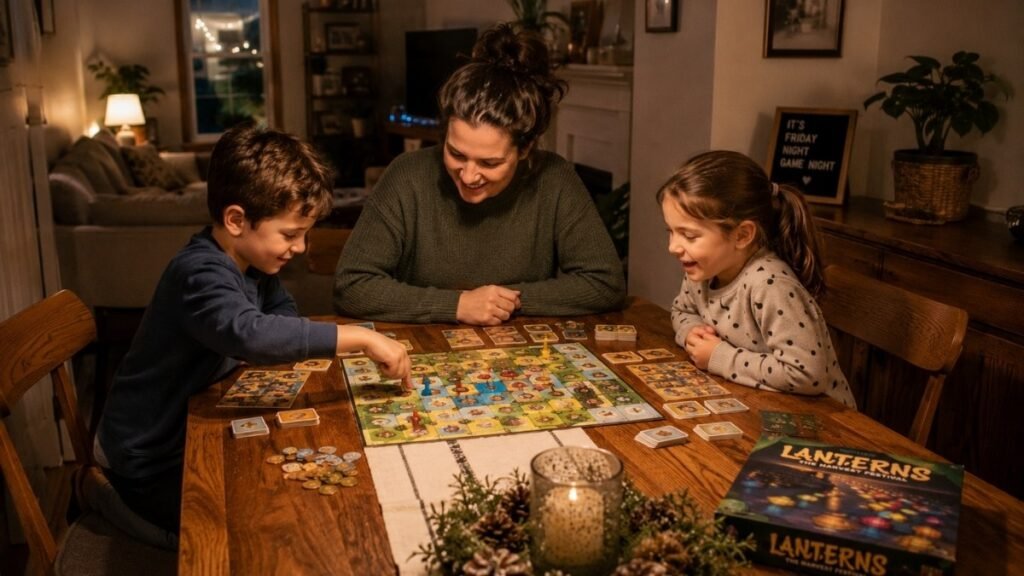
We started a Friday night game night about two years ago, mostly as an experiment. I expected it to last a month. It’s still going — and more importantly, my kids now ask about it during the week. They plan which game they want to play. They talk about their strategy in the car on the way home from school.
I don’t know exactly what we’d have done differently without it. I do know it’s become one of the things they’ll probably remember.
Before You Buy: 5 Questions Every Parent Should Ask
Most board game purchasing regret is preventable. These five questions will save you more money than any review.
How Old Is Your Child Really — Not Just the Age on the Box?
Age labels on board games are suggestions, not developmental assessments. A 5-year-old who’s been playing games since age 3 may be ready for games labeled 7+. A 7-year-old who’s never played a strategy game may find a 5+ label genuinely challenging.
The more useful question: what does your child currently do successfully in their daily life? Can they follow a three-step instruction? Hold a short sequence of events in their mind? Take turns without a meltdown? These functional questions tell you more than the box age.
Can Your Child Focus for More Than 20 Minutes?
A game that takes 45 minutes is the wrong game for a child who can sustain focused attention for 15. This is not a character flaw — it’s developmental. Match game length to actual attention span, not optimistic attention span.
For most children under 5: games under 15 minutes. Ages 5–7: up to 20–25 minutes. Ages 7+: can manage most standard game lengths, though an hour-plus is still ambitious for many.
Do They Enjoy Competition or Cooperation?
This is probably the most important question and the one most parents skip. Some children are genuinely motivated by competition — they like trying to win, they handle losing reasonably well, the back-and-forth of a competitive game is fun for them. Others find competition genuinely distressing — every loss feels catastrophic, and the game stops being fun.
Neither response is a problem. It’s information. And there are excellent games for both orientations.
Will Adults Enjoy Playing Too?
Be honest with yourself here. If the answer is “I will tolerate it,” you’re not choosing a family game — you’re choosing a task. And tasks don’t become Friday night rituals.
The games that get played most often in homes with children are almost always the ones where the adults are also genuinely engaged. Not just playing along, but actually interested in what’s happening. This is worth weighting heavily in your selection.
How Much Cleanup Can Your Family Realistically Handle?
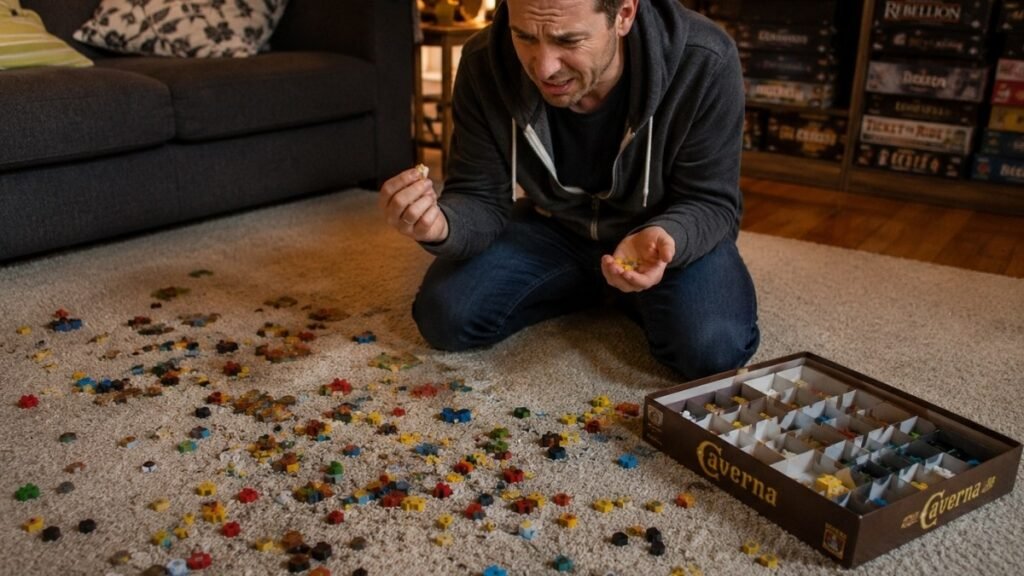
Some games have 200 tiny components that need to be sorted back into labeled compartments after every play. These games are genuinely excellent. They are also genuinely difficult to maintain in a household with young children who do not care about labeled compartments.
If you’ve ever opened a board game to find twelve pieces missing because they’ve gradually been absorbed into the carpet ecosystem, you know what I’m talking about. Choose games where the cleanup is proportional to the time you have.
Cooperative vs Competitive Board Games: Which Is Better for Your Child?
There’s a persistent debate in parenting communities about this, and it usually generates more heat than light. Let me try to be more useful.
Benefits of Cooperative Games
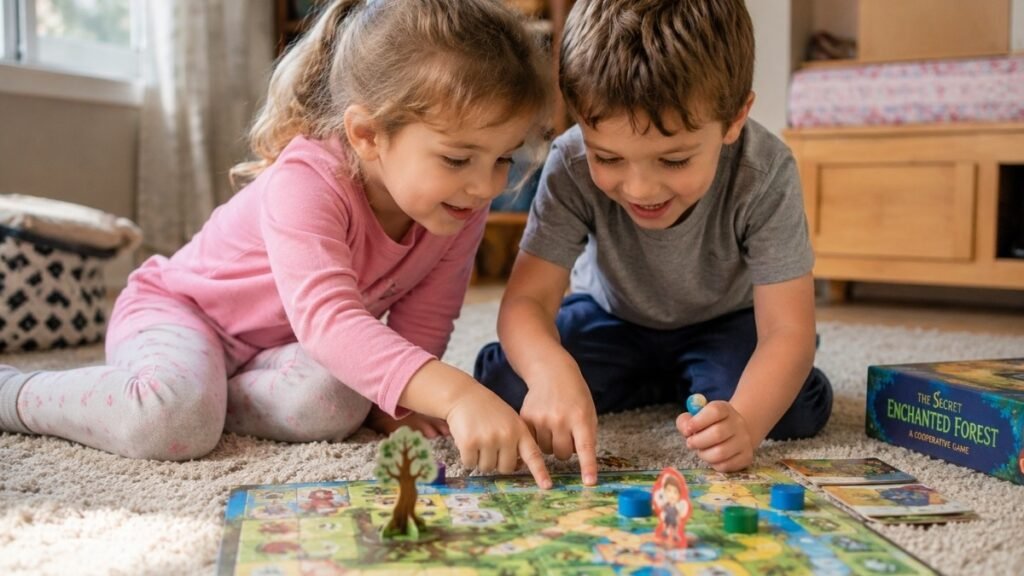
In a cooperative game, everyone plays against the game itself — there’s a shared goal, a shared outcome, and everyone wins or loses together. The most obvious benefit is that no one cries because they lost. But the deeper benefit is different: cooperative games create a context where children practice communicating, listening to other players’ ideas, and contributing to shared decisions.
Pandemic Junior, Hoot Owl Hoot, Outfoxed! — these are cooperative games that children consistently rate as genuinely fun, not just “nice.” They work especially well for children who find competition genuinely stressful, and for families with significant age gaps between players.
When Competitive Games Become Frustrating
A post on r/Parenting that made me feel very seen: “My son threw the Candy Land board across the room because his sister won. He’s four. Is this normal?”
The comments were consistent: yes, completely normal. Young children’s ability to handle competitive loss is not correlated with their intelligence or character. It’s correlated with their frontal lobe development, which is incomplete until their mid-twenties. Some children develop frustration tolerance earlier; some later. The throwing-the-board phase is almost universal.
What helps: starting with cooperative games, gradually introducing competitive ones, playing alongside them in the early stages, and having clear expectations in place before the game starts.
Signs Your Child Is Ready for Healthy Competition
- They can handle losing in other contexts without extended distress
- They can recognize that someone else winning is not the same as them losing at life
- They can articulate what they’d do differently next time
- They can congratulate a winner, even with some visible effort
These signs typically emerge somewhere between ages 5 and 7, with significant individual variation.
Easy House Rules That Reduce Arguments
The “practice round” rule: First round doesn’t count. Everyone is just learning.
The “good move” rule: Instead of congratulating only winners, we notice and name good moves during the game.
The “rematch rule”: A rematch is always available immediately, no questions asked.
The “teacher rule”: The person who knows the game best teaches the newest player.
The Best Board Games by Age and Development Stage
Every child develops at their own pace, so the age printed on a game box should be treated as a starting point—not a strict rule. Attention span, language skills, emotional maturity, and previous gaming experience all influence whether a board game feels exciting or frustrating.
Ages 2–3: First Matching and Turn-Taking Games
Why it works: Two to three-year-olds can match, are beginning to take turns, and can handle simple rules — one at a time.
Recommended games: Hi Ho Cherry-O, Sequence for Kids, Animal Upon Animal, Memory (12–16 cards)
Skills developed: Turn-taking, basic counting, color recognition, following simple rules
Average play time: 5–10 minutes | Parent involvement: High | Watch out for: Small pieces, meltdowns when losing
Ages 4–5: Learning Through Simple Strategy
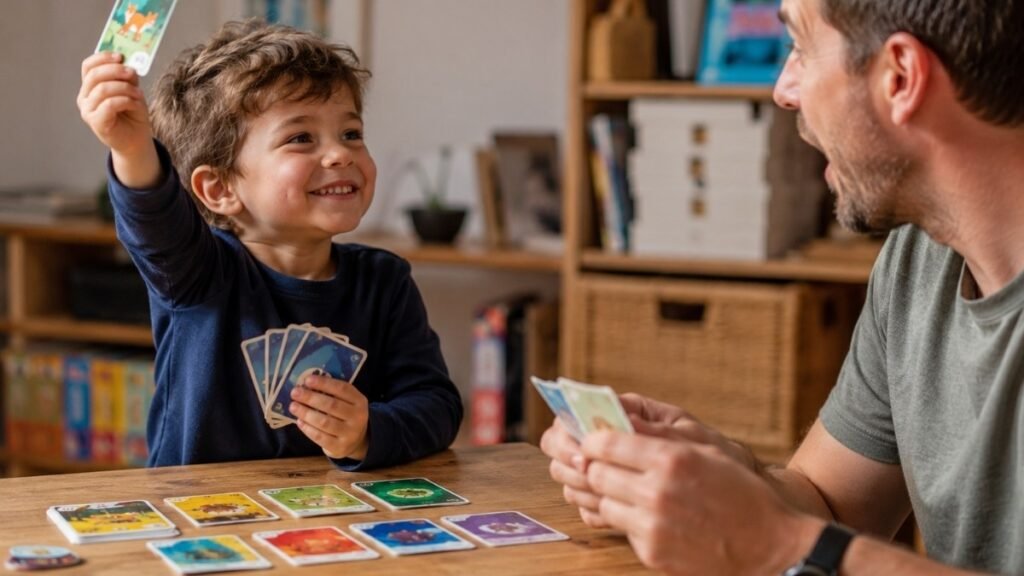
Why it works: Four and five-year-olds have longer attention spans and are beginning to think one move ahead — the emergence of genuine strategy.
Recommended games: Hoot Owl Hoot, Zingo, Outfoxed!, Sleeping Queens, Spot It!
Skills developed: Simple strategy, deductive reasoning, cooperative decision-making
Average play time: 10–20 minutes | Parent involvement: Moderate | Watch out for: Resist the impulse to help them win
Ages 6–8: Logic, Reading, and Teamwork
Why it works: Six to eight-year-olds can read game components, follow complex rules, and plan multiple moves ahead.
Recommended games: Ticket to Ride: First Journey, Blokus, Pandemic Junior, Sushi Go!, Connect Four
Skills developed: Spatial reasoning, route planning, cooperative strategy, reading
Average play time: 20–30 minutes | Parent involvement: Low to moderate
Ages 9–12: Strategy, Planning, and Friendly Competition
Why it works: Older children can handle genuine strategic complexity — including games where a 10-year-old can genuinely beat an adult.
Recommended games: Ticket to Ride, Catan, Codenames Family, Dixit, Forbidden Island
Skills developed: Long-term planning, negotiation, resource management
Average play time: 30–60 minutes | Parent involvement: Equal player
Educational Board Games That Don’t Feel Like Learning
The problem with most “educational” board games is that they feel educational. The best ones work because children are focused entirely on playing — and the learning is what happens in the background.
Math Games
Prime Climb (multiplication through movement), Sum Swamp (addition/subtraction, 5+), Zeus on the Loose (mental addition, 8+)
Reading and Vocabulary
Zingo Sight Words (4–8), Apples to Apples Junior (requires reading), Bananagrams (word building, 7+)
STEM Thinking
Gravity Maze (spatial reasoning), Chocolate Fix (deductive logic), Robot Turtles (programming logic, 4–8)
Memory and Concentration
Ravensburger Memory series, Halli Galli (speed and observation), Ghost Blitz (observation speed)
Problem-Solving
Clue Junior (deductive reasoning, 5+), Sherlock Express (elimination logic, 7+), Rush Hour Junior (spatial problem-solving)
The Best Board Games for Different Family Situations
Even the best board game can be the wrong choice if it doesn’t fit your family’s everyday life. A game that’s perfect for a quiet weekend may feel overwhelming after a busy school day, while one child might love competition and another may burst into tears after losing.
For Kids Who Hate Losing
Start here and stay here: Hoot Owl Hoot, Outfoxed!, Pandemic Junior, Forbidden Island — all cooperative, no individual losers.
For Siblings With Different Ages
Dixit (everyone contributes differently), Codenames (teams can be mixed), Spot It! (speed-based, age advantage minimal). Give the younger child a specific meaningful role.
For Busy Weeknights
Under 20 minutes, minimal setup: Sushi Go!, Spot It!, Sleeping Queens, Zingo, Blink. Keep accessible on a low shelf.
For Travel
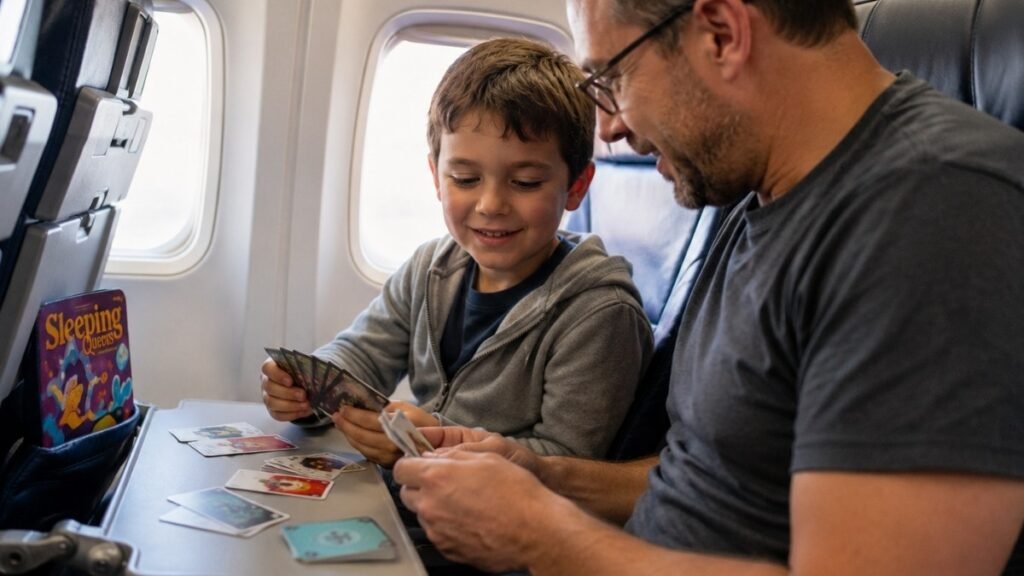
Card-only games: Sushi Go!, Blink, Taco Cat Goat Cheese Pizza, Sleeping Queens travel version, UNO. Magnetic travel sets for Chess/Checkers.
For Grandparents Visiting
Five-sentence rule explanation, luck matters enough that the child has a real chance: Sequence for Kids, Zingo, Uno for younger children. Ticket to Ride, Dixit for older.
For Rainy Weekends
This is the occasion for longer games: Catan, Ticket to Ride, Pandemic. Games that fill an entire afternoon when you have the time to do them properly.
Board Games Adults Won’t Get Bored Playing
My honest “Parent Fun Factor” ratings:
Dixit — Genuinely beautiful, creative, completely enjoyable for adults. Parent Fun Factor: 9/10
Blokus — Pure spatial strategy. Adults often find this more engaging than children initially. Parent Fun Factor: 9/10
Ticket to Ride — Strategic enough to be interesting, simple enough for children. Parent Fun Factor: 8/10
Codenames Family — Excellent if you like word games. Parent Fun Factor: 8/10
Sleeping Queens — More fun than it should be. Parent Fun Factor: 7/10
Hoot Owl Hoot — You will be okay. Parent Fun Factor: 5/10. But your 4-year-old will be delighted, and that’s worth something.
Honest Buying Mistakes Parents Often Regret
Not every highly rated board game is a good fit for every family. Some games look fantastic on the shelf but end up sitting untouched after a few plays because they’re too complicated, take too long to set up, or simply don’t match a child’s interests or attention span.
Games With Too Many Tiny Pieces
We bought a game I will not name that came with 214 components sorted into 12 labeled bags. By the sixth session, it was unplayable. The box is now in a closet permanently. If a game has more than 50 pieces, evaluate carefully whether your household can maintain it.
Games That Take Forever to Explain
Any game whose rules require more than 10 minutes to explain is the wrong game for families with children under 8.
Games That Are Finished After One Play
Replay value above almost everything else. A game with infinite replayability that’s slightly less spectacular on the first play is a dramatically better investment.
Games With Weak Storage Design
Buy a few small zip-lock bags to organize components in any game that doesn’t come with good storage. Five minutes of work extends the game’s life significantly.
Games That Create Unnecessary Sibling Fights
Some games have mechanics specifically designed to interfere with other players. With siblings who already fight, these are a reliable conflict accelerator. Know your children.
Our Family-Friendly Board Game Comparison Table
| Game | Age Flexibility | Replay Value | Parent Fun | Setup | Cleanup | Learning | Frustration Risk | Travel |
|---|---|---|---|---|---|---|---|---|
| Hoot Owl Hoot | ⭐⭐⭐⭐⭐ | ⭐⭐⭐ | ⭐⭐⭐ | ⭐⭐⭐⭐⭐ | ⭐⭐⭐⭐⭐ | ⭐⭐⭐⭐ | Low | ⭐⭐⭐⭐ |
| Zingo | ⭐⭐⭐⭐ | ⭐⭐⭐ | ⭐⭐⭐ | ⭐⭐⭐⭐⭐ | ⭐⭐⭐⭐ | ⭐⭐⭐⭐ | Low | ⭐⭐⭐ |
| Sleeping Queens | ⭐⭐⭐⭐ | ⭐⭐⭐⭐⭐ | ⭐⭐⭐⭐ | ⭐⭐⭐⭐⭐ | ⭐⭐⭐⭐⭐ | ⭐⭐⭐⭐ | Medium | ⭐⭐⭐⭐⭐ |
| Spot It! | ⭐⭐⭐⭐⭐ | ⭐⭐⭐⭐ | ⭐⭐⭐ | ⭐⭐⭐⭐⭐ | ⭐⭐⭐⭐⭐ | ⭐⭐⭐ | Low | ⭐⭐⭐⭐⭐ |
| Blokus | ⭐⭐⭐⭐ | ⭐⭐⭐⭐⭐ | ⭐⭐⭐⭐⭐ | ⭐⭐⭐⭐ | ⭐⭐⭐ | ⭐⭐⭐⭐⭐ | Medium | ⭐⭐ |
| Ticket to Ride Jr. | ⭐⭐⭐ | ⭐⭐⭐⭐ | ⭐⭐⭐⭐ | ⭐⭐⭐ | ⭐⭐⭐ | ⭐⭐⭐⭐ | Medium | ⭐ |
| Outfoxed! | ⭐⭐⭐⭐ | ⭐⭐⭐⭐ | ⭐⭐⭐⭐ | ⭐⭐⭐⭐ | ⭐⭐⭐⭐ | ⭐⭐⭐⭐⭐ | Low | ⭐⭐ |
| Dixit | ⭐⭐⭐⭐⭐ | ⭐⭐⭐⭐⭐ | ⭐⭐⭐⭐⭐ | ⭐⭐⭐⭐⭐ | ⭐⭐⭐⭐ | ⭐⭐⭐⭐ | Low | ⭐⭐ |
| Catan | ⭐⭐⭐ | ⭐⭐⭐⭐⭐ | ⭐⭐⭐⭐⭐ | ⭐⭐ | ⭐⭐ | ⭐⭐⭐⭐⭐ | High | ⭐ |
Quick Tips to Help Kids Enjoy Board Games More
Choosing the right board game is only the first step. Even an excellent game can end up forgotten if it always feels like a chore, takes too long to set up, or is introduced at the wrong time.
Start With Short Sessions
End while everyone’s still having fun. This is what builds enthusiasm for next time.
Celebrate Good Moves Instead of Winning
“That was a really smart play.” These comments shift focus from outcome to process — where the real development happens.
Rotate Games
Put games “away” for a few weeks before bringing them back — they’ll feel new again.
Let Children Teach the Rules
Once a child knows a game well enough to explain it, let them teach it to grandparents or visitors. Teaching requires genuine understanding.
Create a Weekly Game Night
This was the single change that made the biggest difference in our house. A fixed weekly game night removes the negotiation — it’s just what Friday evenings are. After about a month, our kids started looking forward to it during the week. After three months, they started suggesting which game they wanted days in advance. The screens left the room without a battle.
Frequently Asked Questions
Can toddlers safely play board games with small pieces around? No — this is non-negotiable. Anything small enough to fit through a toilet paper roll is a choking hazard for children under 3. Store games with small pieces completely out of reach of toddlers, and never allow mixed-age play with small components unsupervised.
What should I do if my child cries every time they lose a game? Developmentally normal, peaks around ages 4–6. Short-term: switch to cooperative games. Longer-term: play competitive games regularly, naming and normalizing the feeling of losing without rushing past it. The goal isn’t to eliminate the feeling — it’s to help them manage it.
Which board games work best for siblings with different ages? Cooperative games are the most naturally inclusive. Hoot Owl Hoot (4+), Outfoxed! (5+), and Pandemic Junior (8+) work well with mixed ages. For competitive games, give the younger child a specific meaningful role rather than trying to play the same game identically.
How can I stop board games from collecting dust on the shelf? Keep 3–4 games accessible without requiring setup. Establish a regular game time so it’s expected rather than optional. And choose games that you — the adult — actually enjoy. Games you don’t want to play will always find reasons to stay on the shelf.
What are the best travel-friendly board games for kids? Sushi Go!, Sleeping Queens, Blink, Spot It! (compact tin), UNO. Card-only games pack flat and have no loose pieces. Magnetic travel sets work well for airplane trays.
Are educational board games actually effective? Yes, with an important qualifier: only when the child is playing because it’s fun, not because they’ve been told it’s educational. Game-based learning research shows strong retention — but only for games that are genuinely engaging. A child playing Prime Climb because they love it learns significantly more math than a child playing it as homework.
How long should a board game session last for young children? Ages 2–3: 5–10 minutes. Ages 4–5: up to 20 minutes. Ages 6–8: 20–30 minutes. Ages 9+: most standard game lengths. Always end while everyone still wants to play more.
Are expensive board games always better? No. Some of the most-played games in most households are modestly priced. Prioritize replay value, age match, and parent enjoyment over price or brand recognition.
🏡 Editor’s Choice
If we could recommend only one board game for most families, it would be Outfoxed!.
It strikes the best balance between cooperation, replay value, simple rules, and family fun. It’s especially well suited for children who are still learning how to handle winning and losing, making it one of the easiest games to bring to the table again and again.
Final Thoughts
The best board game for your family isn’t the one with the highest rating or the one that’s currently trending. It’s the one your child asks to play again before the first session is over.
Different ages, different personalities, different family rhythms — there’s no single right answer. A game that’s perfect for a household with a 7-year-old only child might be completely wrong for a family with a 4-year-old and a 9-year-old who compete about everything. Your knowledge of your specific children is worth more than any review.
What I can tell you from experience: when you find the right game — the one where everyone’s actually engaged, where the adults aren’t secretly watching the clock, where your child asks for one more round even though it’s past bedtime — it changes something. The screens get left in the other room. The table becomes a place where everyone actually wants to be.
That’s worth some trial and error to find.
At Toizora, we believe great toys should support childhood — not complicate it. When we recommend a board game, we look beyond age labels and bestseller lists to consider how it fits real family life, from busy weeknights to rainy weekends and mixed-age siblings. Our goal is simple: help parents choose toys that are safe, engaging, and genuinely worth bringing home.
Related guides:
- Rainy Day Activities for Kids
- Best Toys for 5-Year-Olds
- Best Toys for 6-Year-Olds
- Best Gifts for 5-Year-Olds
- Best Gifts for 6-Year-Olds
- Educational Toys: The Complete Guide
A Note from Toizora
Childhood is made up of ordinary moments that quietly become lasting memories. A rainy afternoon around the dining table, one more round before bedtime, or the laughter that follows a game no one expected to love—these moments often matter more than the toys themselves.
At Toizora, we’re here to help families choose toys that encourage learning, imagination, and genuine connection. If this guide helps your family spend a little less time scrolling and a little more time playing together, then we’ve done exactly what we hoped to do.