
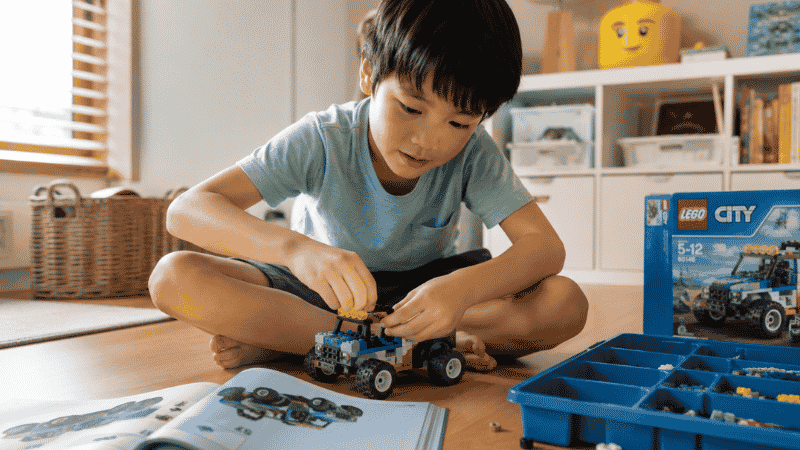
Six is a funny age to shop for. Your child has very strong opinions about what they want — usually something they saw advertised online, or whatever their best friend at school currently has. And those opinions are delivered with a confidence that can make you question yourself: Maybe I should just get the thing they asked for?
Here’s the reality check: toys for 6 year olds sit at a genuinely interesting developmental crossroads. First grade is in full swing. They’re learning to read real words, doing actual math, navigating complicated friendships, and developing a moral compass that makes them suddenly, intensely concerned with what’s “fair.” They’re capable of more focus, more complexity, and more genuine skill-building than they’ve ever been.
The toys that serve them best at this age aren’t the flashiest or the most hyped. They’re the ones that match this specific moment — complex enough to feel like a real challenge, social enough to support the friendships they’re building, and open-ended enough to stay interesting past the first afternoon.
This guide gives you the honest, developmental-first view: what 6-year-olds genuinely need from their toys, which categories deliver it, and what to confidently skip.
Key Takeaways
- Six is a social tipping point. According to the CDC, 6-year-olds are increasingly oriented toward peer relationships — fairness matters enormously, friendships deepen, and cooperative and competitive play with other children becomes a primary developmental arena.
- Reading is happening right now. Most 6-year-olds are in active reading development, and toys that naturally incorporate letters, words, and storytelling support this without feeling like extra schoolwork.
- Attention spans have grown significantly. A focused 6-year-old can sustain independent play or a project for 30–45 minutes with the right toy — which makes longer LEGO builds, more complex puzzles, and multi-session projects newly accessible.
- Competition is developmentally normal. Six-year-olds want to win. Toys and games that include competitive elements — and practice in handling losing — are genuinely age-appropriate and valuable.
- Screen time still needs limits. WebMD’s developmental guidance for 6-year-olds recommends steady screen time limits to ensure physical play, sufficient sleep, and family time aren’t displaced. The best toys at this age are the compelling screen-free alternatives.
What’s Actually Happening for a 6-Year-Old: The Developmental Picture
Before we get to the toy list, it helps to understand what’s going on developmentally at this specific age — because it changes everything about what makes a toy valuable.
Six-year-olds are in what developmental psychologists call “middle childhood” — a phase marked by rapid cognitive growth, deepening social awareness, and a newly sophisticated sense of self. According to WebMD’s developmental milestones for 6-year-olds, children at this age begin to understand that some words have multiple meanings (which is why they suddenly find jokes and puns hilarious), their peer relationships become more important than ever before, and they’re actively working out where they fit socially and what’s acceptable behavior.
At school, they’re learning to read with increasing fluency, doing basic addition and subtraction, beginning to understand time and sequencing, and navigating the rules of cooperative and competitive games with other children.
The best toys for 6 year olds work with this developmental moment. They offer:
- Enough complexity to feel like a real challenge (not babyish)
- Social dimensions that support friendship and cooperative play
- Competitive elements with room to practice winning and losing gracefully
- Creative and open-ended potential for children who want to direct their own play
- Physical challenges that match their growing coordination and endurance
The Builders: Construction Toys That Grow With a 6-Year-Old
Six is a strong building year. Attention spans are long enough for multi-step projects. Fine motor skills are well-developed. And the desire to create something that looks genuinely impressive — something they can show off — is at a peak.
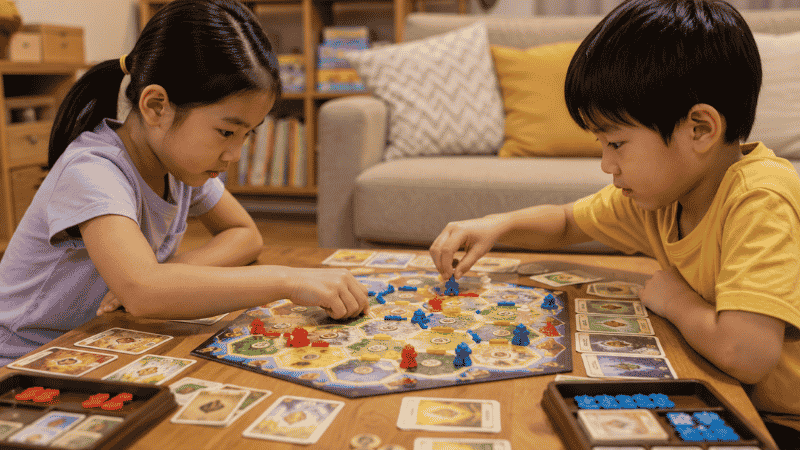
LEGO Sets for 6-Year-Olds
Six is when LEGO really comes into its own. Most 6-year-olds have the patience, fine motor control, and instruction-following ability to tackle sets of 200–400 pieces — and the satisfaction of completing a complex build is genuinely meaningful to them at this age.
What makes a good LEGO set for a 6-year-old:
- A theme they’re genuinely excited about (this matters more than it sounds — interest sustains through the harder sections)
- Clear, image-based instructions with manageable step sizes
- Enough complexity to feel like a real accomplishment, but not so dense that frustration sets in
LEGO City sets (vehicles, buildings, emergency services), LEGO Animal sets, and LEGO Creator 3-in-1 sets are all consistently well-suited to this age. The Creator 3-in-1 sets deserve special mention: one box that builds three different models teaches six-year-olds about deconstruction and creative reuse — a genuinely sophisticated concept.
Best best lego sets for 6 year old approach: Start with a set you know they’ll love the subject of. The topic pulls them through the challenging moments.
Magnetic Tiles: Still Earning Their Floor Space
If your family has magnetic tiles, 6 is the age when their use transforms. Children this age are no longer just building simple shapes — they’re creating elaborate structures with multiple stories, enclosed rooms, and specific functional purposes (a castle, a spaceship, a city block). If you don’t have them yet, a 60–100 piece set is still an excellent investment at this age.
Building Toys for 6 Year Olds: Engineering Kits
At 6, simple engineering kits — ones with gears, pulleys, axles, and simple mechanisms — become genuinely interesting. The child isn’t just building a structure; they’re building something that does something. A crane that lifts. A car with moving wheels. A windmill that spins.
Look for kits that allow rebuilding into multiple configurations rather than producing one fixed model. The engineering value comes from the iterative building process, not the final object.
The Thinkers: Games and Puzzles for First-Grade Minds
Six-year-olds are ready for real strategic thinking — not just following rules, but starting to anticipate what the other player might do. This is a significant cognitive leap, and the right games can support it beautifully.

Best Gifts for 6 Year Old: Strategy Board Games
Six is when strategy games become genuinely engaging. Children at this age can now hold multiple pieces of information in working memory, anticipate consequences, and make decisions based on more than just “what I want right now.”
Best strategy-accessible games for 6-year-olds:
- Blokus — spatial strategy, easy to learn, endlessly replayable
- Sequence for Kids — pattern recognition and strategic placement
- Forbidden Island — cooperative with genuine tension (everyone wins or loses together)
- Connect 4 — classic for a reason; pure two-player strategy with no luck component
- Sleeping Queens — memory, basic math, strategy, and playful storytelling
Games to save for later (just slightly too complex at 6):
- Chess (most 6-year-olds aren’t ready for the full game, though simplified chess apps can introduce concepts)
- Catan Junior (great at 7+)
- More complex deck-building games
Puzzles (200–500 Pieces)
At six, most children are ready for puzzles in the 200–500 piece range — particularly if they’ve been doing puzzles regularly. A 500-piece puzzle becomes a multi-session project that builds persistence, planning, and the satisfaction of delayed reward.
Choose puzzles with a subject your child genuinely loves and Ravensburger-quality cutting (pieces that fit together firmly without being loose). A puzzle that’s too loosely cut falls apart frustratingly and creates a negative experience.
Educational Toys for 6 Year Olds: Reading and Word Games
Six is a pivotal literacy year, and word-based games that make reading feel like play rather than practice are genuinely valuable.
Best literacy-supporting toys for 6-year-olds:
- Blink — fast-paced card game that builds pattern recognition
- Zingo Sight Words — sight word bingo, fast and competitive
- Apples to Apples Junior — vocabulary and creative thinking
- Magnetic poetry sets at the right level — wordplay in a physical, tactile format
None of these feel like homework. All of them build reading and language skills through genuine engagement.
The Imaginators: Creative Play for 6-Year-Olds
Six-year-olds are deeply imaginative — but their imagination now has more narrative sophistication than it did at four. Their pretend play has plots, character arcs, and continuity between sessions. They remember what happened “last time” and build on it.

LEGO as Storytelling Tool
One of the most valuable things a 6-year-old can do with their LEGO isn’t follow the instructions — it’s build their own world after the instructions are done. Many children this age will complete a LEGO set and then immediately repurpose the pieces into something original. This is creativity and engineering thinking simultaneously.
Encourage this rather than displaying the “official” model permanently. The model can always be rebuilt; the open-ended creative play it enables is more valuable.
Art Supplies: Leveling Up at 6
Six-year-olds are moving from “process-focused” art (just enjoying the making) toward “product-focused” art (trying to create something specific that looks a particular way). Both are valid — and both deserve quality materials.
Best art supplies for 6-year-olds:
- Watercolor sets with real pigment (not cheap school-grade sets)
- Colored pencils with good pigment and soft leads (Faber-Castell or Prismacolor Junior)
- Drawing books with step-by-step instructions (many 6-year-olds love being shown how to draw specific things)
- Air-dry clay for three-dimensional projects
- Jewelry-making kits with appropriately-sized beads (fine motor skill + creative outlet)
Michigan State University Extension research confirms that art activities at school age support fine motor development, cognitive planning, mathematical thinking (pattern, proportion, sequence), and language skills — all through what feels purely creative.
Learning Toys for 6 Year Olds: Science Kits
At 6, simple science experiments cross a threshold from “magic show” to “genuine curiosity.” Children this age are starting to ask why — not just enjoying the spectacle, but wanting to understand the mechanism.
Simple science kits for 6-year-olds work best when they include multiple experiments that build on each other conceptually. Baking soda and vinegar reactions, simple circuit projects, crystal growing, and color mixing chemistry are all appropriate and genuinely engaging at this age.
What to look for:
- Clear safety labeling (all materials non-toxic, adult supervision noted where appropriate)
- Multiple experiments rather than one single impressive result
- Simple enough to set up independently (or with minimal adult help)
- A “why does this work?” explanation for each experiment
The Movers: Active Play for 6-Year-Olds
Six-year-olds have coordination and physical confidence that makes active play genuinely impressive. They can pump their legs on a swing, ride a bike, throw and catch with reasonable accuracy, and manage balance challenges that would have been impossible two years ago.
Pedal Bikes and Outdoor Active Toys
If your child is still on training wheels at 6, it’s a great time to remove them. Most 6-year-olds have the balance, leg strength, and coordination to ride a two-wheel bike — and the confidence boost of mastering this milestone is significant.
Consistently high-use outdoor toys for 6-year-olds:
- Two-wheel scooter (most 6-year-olds are fully confident on these)
- Jump rope (individual and group)
- Frisbee
- Beginner badminton or tennis set (hand-eye coordination, can be played with an adult or sibling)
- Sidewalk chalk (still an extraordinary value at any age)
- Sports equipment aligned with their current interests (soccer ball, basketball hoop)
Outdoor Toys for 6 Year Olds: Team and Group Play
Six is when organized games with rules become genuinely fun rather than frustrating. Backyard games like cornhole, bocce, and simple croquet work well because they’re competitive, have clear rules, can be played with adults and children together, and involve enough skill development to keep improving interesting.
Safety at 6: What Parents Still Need to Know
By six, most toy-related choking hazards are no longer the primary safety concern — but there are still important things to watch.
What’s generally appropriate at 6:
- Standard LEGO bricks and small puzzle pieces
- Art materials including scissors (child-safe versions)
- Science kit materials (with age-appropriate supervision)
- Most board game components
What still requires attention:
- Science kit chemicals: Any kit involving reactive materials, heat, or sharp tools should be used with adult presence, regardless of what the box says.
- Powerful magnets: Small neodymium/rare-earth magnets remain a serious medical hazard if swallowed. Avoid toys with loose small powerful magnets.
- Bike and scooter safety: Helmet every time, no exceptions. Consider knee and elbow pads while skills are developing.
- Screen time management: The AAP recommends consistent limits on recreational screen time for school-age children, ensuring it doesn’t displace physical activity, sleep, and face-to-face social time.
Safety certifications:
- ASTM F963 (U.S. toy safety standard)
- CPSC compliance
- ACMI AP non-toxic seal for art supplies
What NOT to Buy: The 6-Year-Old Honest Skip List
Licensed toys with poor underlying design The IP on the box will generate excitement. Poor construction quality will create disappointment within a week. Always evaluate the actual toy — its durability, play value, and safety — not just the branding.
Single-function “educational” gadgets A dedicated handheld learning device is a screen that competes with open-ended play. At 6, the developmental returns on genuinely hands-on, open-ended play remain significantly higher than screen-based alternatives.
Toys their friends have that they haven’t shown genuine interest in Social pressure is real at 6 — peer acceptance matters more than it did at 4. But a toy chosen purely because of social pressure rather than genuine interest rarely gets played with for more than a few days. Ask questions to distinguish genuine excitement from peer influence.
Anything too simple for their actual ability level Six-year-olds are acutely aware of what feels “babyish” — and a toy that doesn’t challenge them will be dismissed quickly. When in doubt, buy slightly more complex rather than slightly simpler.

If You Only Have 10 Minutes: The Quick-Pick Summary
Birthday gift due tomorrow? Here’s the shortlist:
- Best overall: LEGO Creator 3-in-1 set (their favorite subject)
- Best board game: Blokus or Sleeping Queens
- Best building toy: Magnetic tiles expansion OR engineering kit
- Best outdoor toy: Two-wheel scooter + helmet OR sports equipment
- Best science toy: Simple multi-experiment science kit (non-toxic, clearly labeled)
- Best creative toy: Quality colored pencils + drawing instruction book
- Best gifts for 6 year old girl: Jewelry-making kit OR watercolor set + sketchbook
- Best gifts for 6 year old boy: LEGO City set OR engineering building kit
- Best puzzle: 300-piece Ravensburger (their favorite theme)
- Best literacy toy: Zingo Sight Words or Apples to Apples Junior
Frequently Asked Questions
What are the best gifts for a 6-year-old girl? The best gifts for 6-year-old girls match her specific current interests — not generic “girl” categories. Art supplies, jewelry-making kits, LEGO Friends or Creator sets, science kits, strategy board games, and active outdoor toys are all excellent choices. At six, what matters is developmental match and genuine personal interest, not gendered packaging.
What are the best gifts for a 6-year-old boy? Same principle applies. Building sets, LEGO, engineering kits, sports equipment, science experiments, and strategy games are all strong options. The best gift for any 6-year-old boy is one that meets his genuine interests and challenges him just enough to feel proud when he succeeds.
What educational toys work best for 6-year-olds? The most genuinely educational toys for 6-year-olds don’t feel educational — they feel fun. Strategy games, word games, science kits with real experiments, engineering kits, and open-ended building sets all build significant cognitive skills while being genuinely engaging.
Are video games okay for 6-year-olds? Age-appropriate video games in limited quantities aren’t inherently harmful, but the AAP recommends consistent limits for school-age children to ensure screen time doesn’t displace the physical play, reading, and social interaction that are most important for development at this age. The best approach: set consistent time limits and make sure engaging screen-free alternatives are available.
How do I choose a toy that won’t be forgotten in a week? Look for open-ended toys with multiple possible uses and configurations. A toy that can only be done one way — assembled once, done — provides much less lasting value than one with hundreds of configurations or uses. LEGO, building sets, art supplies, and strategy games are all high in “longevity” for this reason.
My 6-year-old only wants screen time and rejects most toys. What should I do? This is very common and doesn’t indicate a problem with the child. Screens are designed by sophisticated teams to be maximally engaging, and they’re competing against toys that require effort. Reduce available screen time, introduce new toys by engaging with them yourself in your child’s presence, and be patient. Most children re-engage with physical play within a week or two once screens are less available.
When should I be concerned about my 6-year-old’s development? Speak with your pediatrician if your 6-year-old has significant difficulty reading compared to classmates, struggles to maintain friendships, has extreme difficulty managing frustration or losing, or shows notable regression in skills they previously had. Early support makes a meaningful difference — raise any concerns at the next well-child visit without waiting.
The Bottom Line
Shopping for the best toys for 6 year olds is really about understanding this specific, remarkable year. Your child is smarter, more socially aware, more competitive, and more capable of sustained focus than they’ve ever been before. They want to be taken seriously — and the toys that earn their sustained attention are the ones that do exactly that.
Give them something complex enough to feel like a real challenge. Something social enough to share with friends. Something creative enough to make their own.
And then — when you have a few minutes — sit down and play with them. Ask them to show you how it works. Let them teach you something.
That’s the part that matters most.
Continue the journey: read our guide to Best Toys for 5-Year-Olds for the year before, or explore our Gift Guides for birthday and holiday picks organized by age and budget.
References
- Centers for Disease Control and Prevention (CDC). (2023). Middle Childhood (6-8 years): Developmental Milestones. https://www.cdc.gov/ncbddd/childdevelopment/positiveparenting/middle.html
- American Academy of Pediatrics (AAP). (2024). Media and Young Minds. https://www.healthychildren.org
- National Association for the Education of Young Children (NAEYC). (2024). Good Toys for Young Children by Age and Stage. https://www.naeyc.org/resources/topics/play/toys
- Michigan State University Extension. (2023). What Are the Best Toys for Children? https://www.canr.msu.edu/news/what-are-the-best-toys-for-children
- WebMD. (2025). 6-Year-Old Child Developmental Milestones. https://www.webmd.com/parenting/child-at-6-milestones
- U.S. Consumer Product Safety Commission (CPSC). Toy Safety. https://www.cpsc.gov/Safety-Education/Safety-Guides/Toys