
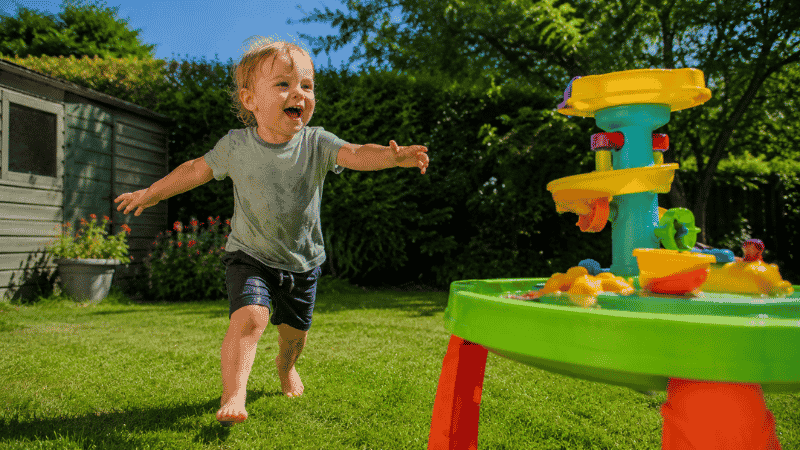
There’s a specific kind of afternoon energy that only parents of toddlers understand. It’s approximately 3 PM. Your child has been inside since lunch. The living room now looks like a small explosion happened, and your toddler — despite having access to literally every toy they own — is standing in the middle of it all, looking at you with that particular expression that means “I need to do something, and I need to do it right now.”
The answer is almost always outside.
Outdoor toys for toddlers aren’t just about burning energy, though they do that very effectively. Research from the American Academy of Pediatrics confirms that outdoor play supports physical development, emotional regulation, sensory processing, and cognitive growth in ways that indoor play simply can’t replicate. The uneven ground, the natural light, the unpredictability of the outdoors — all of it challenges a toddler’s brain and body in uniquely beneficial ways.
The problem isn’t knowing that outside is good. The problem is knowing what to put out there — what’s actually worth the money, what’s safe, what won’t be abandoned after three days, and what works for the outdoor space you actually have.
This guide answers all of that.
Key Takeaways
- Outdoor play is developmentally irreplaceable. The CDC’s developmental guidelines note that active outdoor play supports gross motor development, balance, coordination, and spatial awareness in ways that indoor play cannot fully substitute.
- The best outdoor toys for toddlers grow with them. A sand and water table that works at 18 months is still engaging at 3.5 years — just differently. Open-ended outdoor toys deliver years of value, not seasons.
- Safety standards change outdoors. UV exposure, weather durability, splinter risk, and fall height become relevant considerations that don’t apply indoors. This guide covers what to check.
- You don’t need a big backyard. Some of the highest-value outdoor toys for kids work in a small patio, a balcony, or a patch of grass. Space doesn’t need to be the barrier.
- Movement comes first. Before purchasing any outdoor toy, ask whether it requires your child to move their body. The toys that deliver the most developmental value at this age are almost always the ones that get them running, climbing, balancing, or digging.
Why Outdoor Play Matters More Than You Think
I know you know outside is good for them. But I want to say this more specifically, because it actually changes which toys are worth buying.
Toddlers who spend regular time in outdoor environments show measurably better gross motor development — not just stronger muscles, but better balance, proprioception (body awareness), and coordination. This is because outdoor environments are inherently irregular: grass is uneven, gravel shifts underfoot, a slight slope requires constant micro-adjustments. Your toddler’s brain is doing significant work just navigating the backyard that it doesn’t have to do on a flat indoor floor.
The National Institute for Play has documented that outdoor play specifically supports what they call “rough and tumble play” and “adventure play” — categories of physical experience that are crucial for risk assessment, resilience, and physical confidence. In other words: the child who climbs things outside learns to understand their body’s limits in a way that translates to genuine life confidence.
This isn’t an argument for buying expensive equipment. A pile of rocks, a patch of mud, and a stick are genuinely excellent outdoor toys. But the right purchased toys can extend that play, give it direction, and make it more likely to happen independently — which is where the real magic for parents is.
Outdoor Toys for Toddlers: By Age and Developmental Stage
Outdoor Toys for 1 Year Old: Starting Outside
One-year-olds outdoors are sensory scientists. They want to touch, taste (we’re working on the “no eating dirt” thing), feel, and explore. The outdoor environment is naturally stimulating for them — which means you don’t need much in the way of purchased toys. But a few well-chosen additions extend play significantly.
What works at this age:
Soft balls in various sizes — Rolling, chasing, and carrying balls builds gross motor skills and spatial awareness. Choose balls large enough not to be a choking hazard if mouthed (larger than 1.75 inches) and soft enough to avoid injury.
Small sandbox or dig tray — Even a shallow plastic tub filled with clean play sand provides hours of sensory exploration. Add a few cups and spoons. At one, the goal is simply touching and experiencing the texture — no castle-building required.
Pop-up tent or shade shelter — One-year-olds can be overwhelmed by the vastness of outdoor space. A small pop-up tent gives them a “home base” to return to — a contained, safe spot within the bigger environment. This dramatically increases how long they’ll stay outside comfortably.
Bubble machine — Genuinely magical for this age. Bubbles engage visual tracking, inspire movement (chasing them), and produce the kind of pure delight that reminds you why this age is wonderful despite everything.
Outdoor Toys for 2 Year Old: When Energy Becomes Intentional
Two-year-olds outdoors are a force of nature. They run — everywhere, without apparent destination. They climb everything available, including things that were not designed to be climbed. They dig with the commitment of someone on a deadline.
This is exactly right developmentally, and the toys that work best at this age are ones that channel this energy rather than contain it.
What works at this age:
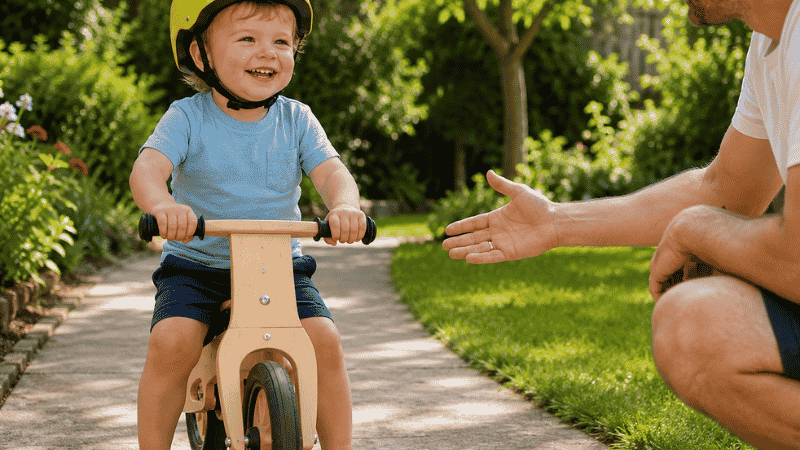
Balance bike + helmet — Two is the ideal age to start a balance bike. Children who begin at 2 typically move to pedal bikes without training wheels by 3.5–4, skipping the training wheel phase entirely. The helmet is not optional — buy it at the same time and establish the habit before it becomes a negotiation point.
Sand and water table — The workhorse of toddler outdoor play. At two, children use sand and water tables for pouring, mixing, building, and the kind of open-ended experimentation that sustains attention for surprisingly long stretches. Look for a table with separate sand and water sections, drain plugs for easy cleaning, and legs at the right height for comfortable standing play.
Push ride-on toys — Large plastic ride-ons that kids propel with their feet build leg strength and coordination. The ones that also have a storage compartment or a handle for a parent to push are particularly versatile.
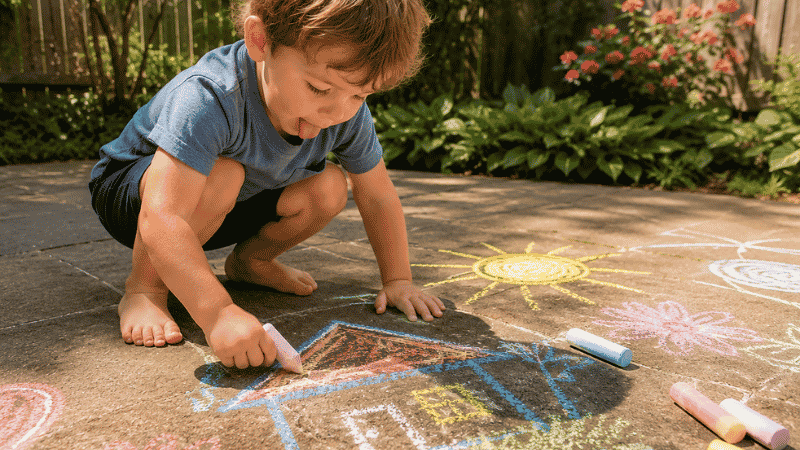
Sidewalk chalk — Underrated, extremely high value. Sidewalk chalk costs almost nothing, involves the whole body (crouching, reaching, stepping back to see), and creates an investment in the outdoor space that makes kids want to stay outside.
Outdoor Toys for Toddlers Ages 3–4: The Big Kid Energy Phase
Three and four-year-olds outdoors are genuinely impressive physical creatures. They can run fast, jump intentionally, throw and catch with increasing accuracy, and sustain physical play for 30–45 minutes without a break. This is the age where outdoor play starts to look like actual childhood — elaborate games, physical challenges, and the beginning of real outdoor independence.
What works at this age:
Three-wheel scooter (or transition to two-wheel) — Most 3-year-olds are ready for a scooter, and by 3.5 many can manage a standard two-wheel version. Scooters build balance, core strength, and coordination — and they’re genuinely fast, which matters enormously to this age group.
Swing set with toddler bucket seat — There’s a reason swings appear in basically every childhood memory. The vestibular input (sensory information from movement through space) that swinging provides is genuinely regulating — kids who swing tend to be calmer and more focused afterward. A simple A-frame swing with a toddler-appropriate bucket seat doesn’t require a large yard.
Splash pad mat or sprinkler — For warm weather, a simple sprinkler or splash pad mat provides water play that’s more accessible than a full water table and takes about thirty seconds to set up. Kids will run through it for a genuinely astonishing length of time.
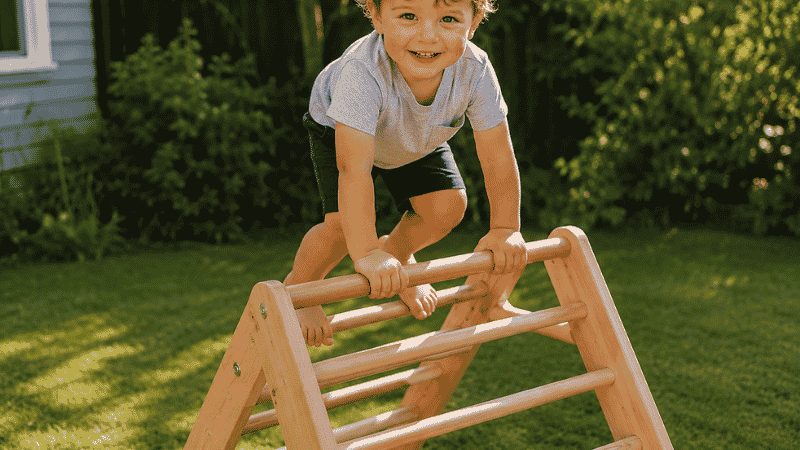
Climbing triangle or dome — By 3, most toddlers are ready for a beginner climbing structure. A Pikler triangle (an indoor/outdoor climbing frame) or a small climbing dome provides the physical challenge they crave in a safer, more contained format than furniture-climbing. The Pikler triangle in particular grows with children from about 12 months through age 6 as climbing ability develops.
The Best Outdoor Toy Categories: What’s Worth Buying
Water Table for Toddlers: Worth Every Penny
If you can only buy one outdoor toy for a toddler in the 1–4 year range, a water table is consistently the highest-value choice — not in terms of complexity, but in terms of daily use across a wide age range.
The appeal is simple: water. Toddlers are magnetically drawn to it. The sensory input (temperature, resistance, movement) is deeply satisfying, the cause-and-effect is immediate and clear, and the play is genuinely open-ended — there’s no single “right” way to play with a water table, which means interest doesn’t plateau the way it does with single-function toys.
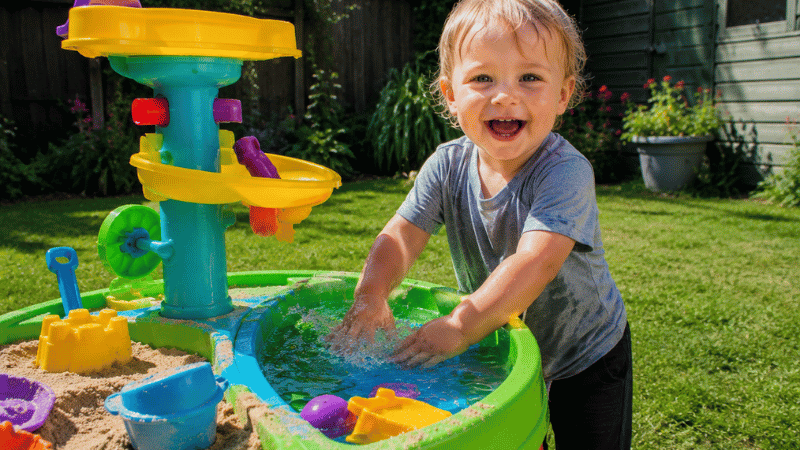
What to look for in a water table:
- Sturdy legs at the right height (your toddler should stand comfortably without hunching or reaching up)
- A drain plug that actually works and is accessible without tools
- No small detachable accessories for children under 3
- UV-stable plastic that won’t fade or crack after a season outside
- Easy to empty and move for storage
Editor’s opinion: The water tables with separate sand and water sections are genuinely twice as useful as single-section versions. The ability to mix and compare the two materials adds months of additional play value.
Backyard Toys for Toddlers: The No-Space-Required List
Not everyone has a sprawling backyard, and some of the best outdoor toys for toddlers work perfectly in smaller spaces. This list is specifically for apartments, small patios, balconies, and compact yards:
- Bubble machine — Requires approximately 2 square feet of space
- Chalk and a small paved area — The smaller the space, the more creative the chalk art
- Pop-up tent — Packs flat, sets up in 30 seconds, works anywhere
- Splash mat/sprinkler — Rolls up to the size of a yoga mat
- Balance bike — Works in a hallway, a corridor, or a tiny outdoor space
- Small sensory tub — A shallow plastic bin with sand or water, works on any flat surface
Real parent note: I’ve done full sensory water play on a six-foot balcony with a plastic bin and a towel on the ground. Outdoor play doesn’t require outdoor space — it requires fresh air and a change of environment.
Outside Toys for Toddlers That Last More Than One Season
The outdoor toys that genuinely last — that get used year after year rather than abandoned after a summer — share a few characteristics: they’re open-ended, they’re durable, and they grow with the child.
The long-haul outdoor toy investments:
Sand and water table — Used differently at every age from 12 months to 5 years. Sand mode for imaginative play, water mode for sensory and science exploration. Gets more elaborate as children get older.
Climbing frame — A quality climbing structure gets used from toddlerhood through middle childhood. The key is choosing one with age-appropriate challenge now that still offers challenge at 6 and 7. Look for adjustable features or modular designs.
Balance bike — Gets used until they transition to a pedal bike. Some families keep theirs for multiple children. The resale value is also excellent if you buy a quality brand.
Sidewalk chalk — Infinite replenishment, infinite novelty. You will never have “too much sidewalk chalk.”
What doesn’t last:
Cheap plastic playhouses — they fade, crack, and warp within one to two seasons, and often present chemical safety concerns from inferior UV stabilizers.
Licensed character outdoor toys — the character enthusiasm fades fast, and these are often built to lower standards than non-licensed equivalents.
Battery-powered outdoor vehicles — high maintenance, variable weather compatibility, and the novelty-to-cost ratio is unfavorable.
Outdoor Toy Safety: What Changes When You Go Outside
Outdoor play introduces safety considerations that don’t apply indoors, and they’re worth taking seriously.
Material durability and UV stability: Cheap plastics degrade under UV exposure — they become brittle, can crack and splinter, and may leach chemicals as they break down. Look for plastics specifically rated for outdoor use. Quality brands will mention UV resistance in their product descriptions.
Fall height and impact surfaces: Any climbing equipment should have appropriate impact-absorbing material underneath — rubber matting, wood chips, or sand — not hard concrete or pavement. The general guideline is that the impact zone should extend at least six feet beyond the equipment in all directions.
Splinter and sharp edge risk: Outdoor wooden toys need weather-resistant finishing. Unfinished or poorly finished wood exposed to moisture will crack and splinter. Check wooden outdoor toys regularly for rough spots and sand or refinish as needed.
Sun exposure: A practical safety consideration often overlooked: any toy that keeps children outside longer (which is the goal) also means more UV exposure. Establish a shade base — a pop-up tent, a beach umbrella, a shaded patio area — where outdoor play can happen with sun protection.
Water safety: Water tables and paddling pools require supervision for all children under 5, regardless of water depth. A toddler can drown in as little as two inches of water. Never leave standing water unattended with young children nearby, and empty water tables after each use.
Safety certifications:
- ASTM F963 for purchased toys
- CPSC compliance
- IPEMA certification for playground surfaces
- Check age ratings — these reflect real safety assessments, not just marketing
The 10-Minute Outdoor Reset (When You Need Fresh Air Fast)
Sometimes you don’t need a whole outdoor play setup. You just need them outside for twenty minutes while you breathe.
The no-prep outdoor options that work immediately:
- Chalk + pavement — Hand them chalk and say “draw our house.” Walk away.
- Bucket of water + paintbrush — “Painting” the fence or patio with water. Zero mess. Genuinely absorbing.
- Ball + open space — Any ball. Any outdoor space. Works for any age from 12 months up.
- Obstacle course from what’s already outside — A garden chair to walk around, a hose coiled on the ground to jump over, a tree to touch and run back from. No equipment required.
Frequently Asked Questions
What are the best outdoor toys for toddlers? The highest-value outdoor toys for toddlers are: sand and water tables, balance bikes with helmets, bubble machines, sidewalk chalk, and age-appropriate climbing equipment. These deliver the best combination of developmental benefit, sustained engagement, and long-term use across the toddler years.
What outdoor toys are safe for 1-year-olds? For outdoor toys for 1 year old children, prioritize: large soft balls (too big to be swallowed), a shallow sandbox or dig tray with smooth-edged tools, a pop-up shade tent, and a bubble machine. Avoid anything with small parts, sharp edges, or water deep enough to pose a drowning risk.
Do toddlers need expensive outdoor toys? Not at all. Sidewalk chalk, a ball, a bucket of water, and a sandbox cost very little and deliver extraordinary play value. The investment toys — a balance bike, a quality climbing frame, a water table — earn their cost through longevity and daily use, not because expensive equals better.
How long should toddlers spend outside each day? The American Academy of Pediatrics recommends at least 60 minutes of physical activity per day for toddlers, ideally spread across the day. There’s no “too much” outdoor time — the limiting factors are weather, supervision availability, and sun protection, not developmental concerns.
What’s the best outdoor toy for small spaces? For small outdoor spaces — balconies, compact patios, small yards — the best options are: bubble machine, balance bike (works in any smooth space), chalk, a small sensory bin that acts as a portable water table, and a pop-up tent. Outdoor play does not require a large yard.
When should I replace outdoor toys? Inspect outdoor toys at the start of every season. Replace any toy with cracked, brittle, or splintering plastic; significant rust on metal components; fraying rope or fabric; or broken safety features on climbing equipment. Sun damage is cumulative — cheap outdoor toys often need replacement after one to two seasons; quality ones last significantly longer.
The Bottom Line
The best outdoor toys for toddlers earn their space by doing one simple thing: getting your child outside and moving, independently and with genuine engagement.
You don’t need to build a backyard playground. A balance bike, a water table, some chalk, and a bubble machine will serve most toddlers through the entire 1–4 year range with more daily use than any elaborate setup.
Start with movement. Add sensory. Choose open-ended. And let the uneven ground, the wind, and the particular joy of being outside do most of the developmental work for you.
Browse more of our toy guides:
- Best Toddler Toys: The Complete Guide
- Best Travel Toys for Toddlers
- Rainy Day Activities for Kids
- Best Toys for 2-Year-Olds
- Best Toys for 3-Year-Olds
References
- American Academy of Pediatrics (AAP). (2024). The Power of Play: A Pediatric Role in Enhancing Development in Young Children. https://www.healthychildren.org
- Centers for Disease Control and Prevention (CDC). (2023). Developmental Milestones: 1–3 Years. https://www.cdc.gov/ncbddd/actearly/milestones/
- National Institute for Play. (2023). Play Science — Patterns of Play. https://www.nifplay.org/science/
- U.S. Consumer Product Safety Commission (CPSC). Outdoor Play Equipment Safety. https://www.cpsc.gov
- ASTM International. F963 Standard Consumer Safety Specification for Toy Safety. https://www.astm.org
- Zero to Three. (2025). Outdoor Play and Toddler Development. https://www.zerotothree.org