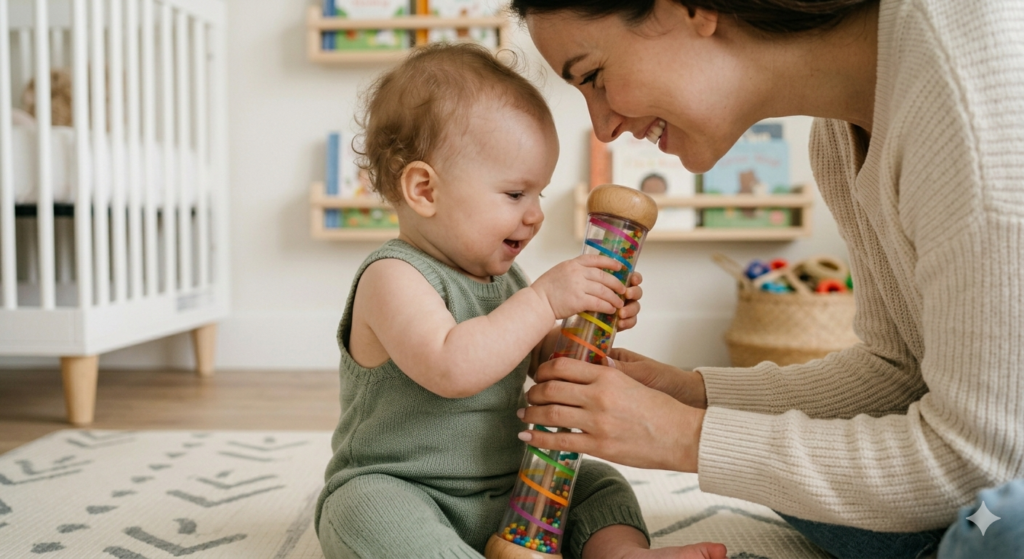
Have you ever watched a six-month-old discover a textured silk scarf or a crinkle book for the first time? Their eyes widen, their tiny fingers grasp frantically, and for a moment, they look like they’ve just discovered a new galaxy. In a way, they have. For an infant, the world isn’t something you “think” about—it’s something you feel.
As a parent in 2026, you’ve likely seen the term “sensory play” on every toy box. But what are sensory toys for babies, exactly? Are they just fancy rattles? Not quite. Think of sensory toys for babies as the “software updates” for your little one’s rapidly developing brain. According to the Journal of Infant Behavior and Development, infants exposed to structured tactile play for just 15 minutes a day show a 22% increase in early cognitive problem-solving by age one.
In this guide, we’re going to dive into what truly stimulates a baby’s growing mind, focusing on the high-growth window of sensory toys for babies 6-12 months, and how you can curate a playroom that feels like a safe, scientific laboratory for your mini-explorer.
The “Hidden” Senses: Why Sensory Play is Brain Food
We often focus on the “Big Five”: Sight, Sound, Touch, Taste, and Smell. But in 2026, pediatricians are increasingly emphasizing two “hidden” systems: Proprioception (body awareness) and the Vestibular System (balance).
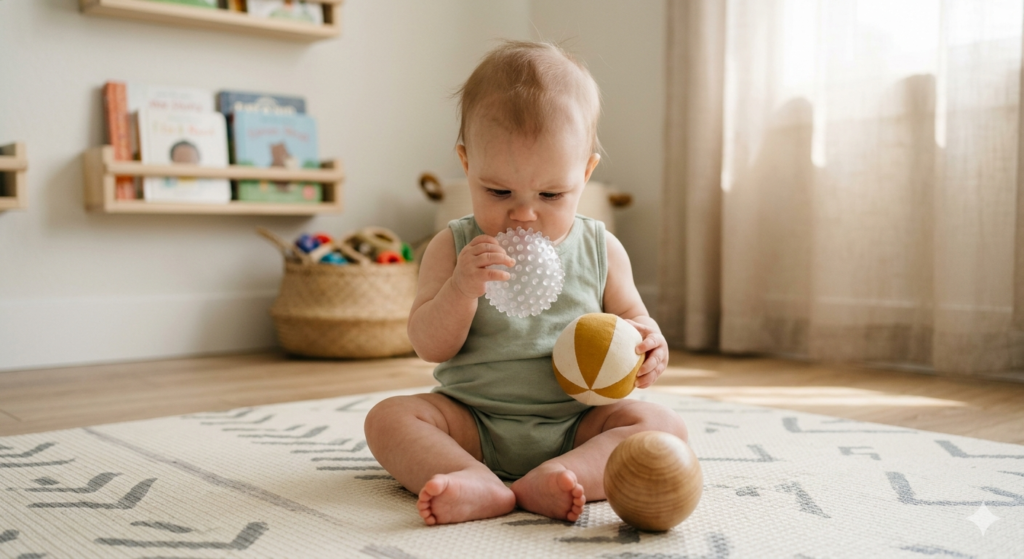
A baby’s brain contains roughly 86 billion neurons at birth, and sensory play is the “glue” that connects them. When a baby handles a weighted beanbag or a textured ball, they aren’t just playing; they are calculating gravity and spatial orientation. At Toizora, our “Positive Categorization” method suggests that a balanced “sensory diet” is just as vital as a balanced nutritional diet for long-term cognitive health.
The Tactile Revolution: Sensory Toys for Babies 6-12 Months
Between 6 and 12 months, your baby’s world expands from the crib to the entire floor. This is the “Golden Window” for sensory integration. Their hands are moving from simple “palmar grasps” to precision “pincer grasps,” making it the prime time for sensory toys for babies 6-12 months that offer varied physical feedback.
1. The Power of “3-Texture” Mapping
To maximize brain stimulation, don’t settle for just one material. The most effective sensory toys for babies follow the “3-Texture Rule”:
- Organic Wood: Provides a cool, hard surface and consistent acoustic feedback.
- Medical-Grade Silicone: Offers a squishy, high-friction grip for teething and tugging.
- Natural Linen or Cotton: Stimulates fine nerve endings with its grainy, soft fibers.
2. High-Contrast Visuals and Depth
By 9 months, a baby’s depth perception is kicking into high gear. While they started with flat black-and-white cards, they now need 3D objects. Sensory toys for babies 6-12 months that feature moving parts—like floating elements in a water mat—challenge the eyes to track and focus across different planes of space.
3. Auditory Logic: The 85dB Safety Limit
Acoustic quality is the unsung hero of sensory play. In 2026, we prioritize hearing safety. Any toy that emits sound should not exceed 85 decibels (about the level of a loud conversation) when held near the ear. Natural sounds—like the “clack” of two wooden discs—help babies understand the physics of impact much better than distorted electronic beeps.
Comparison: Sensory “Value” vs. Toy Category
| Category | Primary Sensory Input | 2026 Safety Standard | Longevity Score |
| Textured Balls | Tactile & Proprioception | BPA/Phthalate-Free | 10/10 |
| High-Contrast Cards | Visual (Optic Nerve) | Soy-based, Non-reflective Ink | 6/10 |
| Rainmaker Tubes | Auditory & Visual Tracking | Shatter-proof Acrylic/Wood | 9/10 |
| Weighted Plush | Proprioception & Comfort | GOTS Organic Cotton | 8/10 |
5 Pro-Tips: Creating a Balanced Sensory Environment
- The “Contrast” Rule: Pair opposites. Give your baby a cold silicone ring and a warm, fuzzy fabric ball. This “sensory juxtaposition” helps the brain categorize textures faster.
- Watch for “Sensory Overload”: If a toy flashes, sings, and moves all at once, it can trigger stress. If your baby turns their head away or arches their back, it’s time for a “sensory break.”
- Prioritize “Mouth-Safe” Certifications: Between 6-12 months, the mouth is a major sensory organ. Look for Dye-free and Formaldehyde-free labels on all fabric sensory toys for babies.
- The 15-Minute Rule: Limit intense sensory sessions (like high-contrast screen play or loud music) to 15 minutes to prevent attentional fatigue.
- Less is More (The “Boring” Toy Trick): A clean, crinkly piece of parchment paper can be a fantastic sensory toy for babies because the child is in total control of the sound and texture.
FAQ: Understanding the Basics
What are sensory toys for babies?
This is the most common question we receive! Simply put, What are sensory toys for babies? They are items specifically designed to isolate and engage one or more of a child’s senses—sight, sound, touch, smell, or movement. Unlike “entertainment toys” that just distract, sensory toys require the baby to process and organize information about the physical world.
Can sensory toys help with a fussy baby?
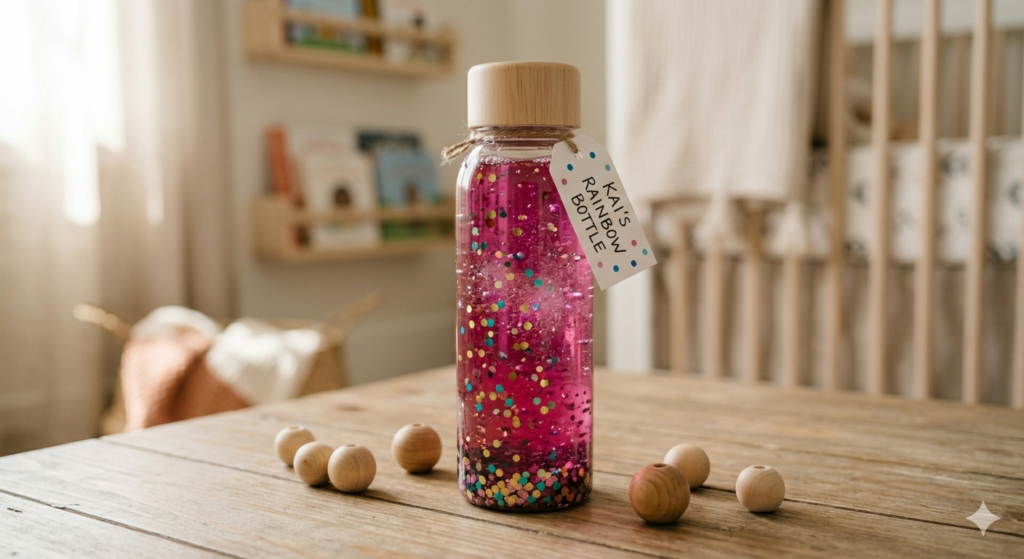
Absolutely. Sensory “grounding” is a powerful tool. Often, a baby is fussy because they are over-stimulated by “junk” input (like a loud TV). Redirecting them to a specific sensory toy for babies—like a slow-moving liquid bubbler—can help calm their nervous system.
Maintenance: The “Squeaky Clean” Protocol
Sensory toys get messy, and in 2026, we have a specific protocol for different materials:
- Silicone: Boil in water at 100°C for 3 minutes once a week.
- Wood: Never soak! Wipe with a damp cloth and a Medical-Grade Nursery Sanitizer (alcohol-free).
- The “Small Parts” Gauge: Ensure every sensory item has a minimum diameter of 4.45 cm (1.75 inches) to prevent choking.
Conclusion: Let Your Baby Lead the Way
As we wrap up this 2026 guide, remember that the most complex sensory toys for babies are merely tools to help your little one explore the grandest laboratory of all: the world around them. Whether it’s the cold sensation of an ice cube or the rhythmic “clack” of wooden blocks, your baby is collecting data to build their future.
My final recommendation: Don’t let the tech distract you. Pick two or three high-quality sensory toys for babies 6-12 months, get down on the floor, and watch the magic happen. The best discovery is the one they make with you by their side.