
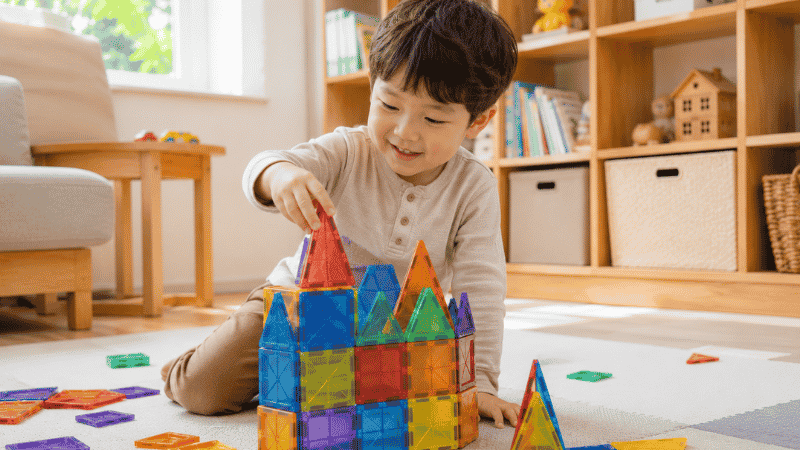
If your living room has recently doubled as a pirate ship, a hospital, and a bakery — all before breakfast — congratulations. You are officially living with a three-year-old.
This is one of the most joyful and genuinely exhausting ages of early childhood. The best toys for 3 year olds aren’t the ones with the most buttons or the biggest box. They’re the ones that feed that enormous imagination, hold attention for longer than two minutes, and — let’s be honest — don’t make you want to hide them in the car.
I’ve watched my own kids navigate this age, and I’ve seen the difference between toys that get played with every single day and toys that become very expensive shelf decorations. The secret isn’t price. It’s match. The right toy for a three-year-old meets them exactly where they are developmentally — and then quietly grows with them for months.
This guide is for parents who want the honest answer, not just a recycled Amazon bestseller list. We’ll cover what three-year-olds actually need from their toys, what categories deliver the most play value, and exactly what to avoid so you don’t repeat the expensive mistakes the rest of us have already made.
Key Takeaways
- Three is the peak pretend play age. According to the American Academy of Pediatrics, imaginative play at this stage directly builds language, empathy, and executive function — the skills that matter most for school readiness.
- Attention spans are longer now — a focused 3-year-old can sustain independent play for 8–15 minutes with the right toy. The wrong toy? About 90 seconds.
- Open-ended beats single-use, every time. A set of wooden blocks has been shown to produce more complex language and creative problem-solving than electronic learning toys (NAEYC, 2024).
- Safety rules change at 3. Small parts that were dangerous at 1 are now appropriate — but magnetic pieces, button batteries, and latex balloons remain serious hazards.
- The best gift for a 3-year-old isn’t always a toy. A play experience — an art kit, a pretend play set, a simple board game — often creates more lasting joy than another battery-powered gadget.
What’s Actually Happening in Your 3-Year-Old’s Brain Right Now
Before we get to the list, it helps to understand why certain toys work so well at this age. Three is a turning point. Your child has moved from the sensory exploration of babyhood into something much more complex: representational thinking. They understand that a block can be a phone, that a blanket can be a cape, and that they can be a veterinarian, a chef, and a superhero in the same afternoon.
According to CDC developmental milestones, most 3-year-olds can now speak in sentences, follow multi-step instructions, draw a circle, and play cooperatively with other children for short periods. Their vocabulary has exploded — from roughly 200–300 words at age 2 to over 1,000 words by their third birthday.
This changes everything about what makes a toy valuable. At three, your child doesn’t need a toy that talks to them. They need one that gives them something to talk about — with you, with a sibling, with an imaginary friend named Gerald.
The best toys for 3 year olds do one or more of these things:
- Invite open-ended storytelling and role-play
- Require the child to make decisions (building, sorting, creating)
- Involve some physical challenge that’s achievable but not too easy
- Allow for cooperative play — doing something with someone else
- Support emerging fine motor skills without causing frustration
The Imaginators: Pretend Play Toys That Unlock the 3-Year-Old Brain
If there’s one toy category that earns its floor space at this age, it’s pretend play. Three-year-olds are processing big emotions, practicing real-world skills, and building empathy — all through make-believe. Research from the University of Colorado Boulder found that children who engage in rich pretend play show significantly stronger executive function and emotional regulation in later childhood.

The Play Kitchen
This is the single most-used toy in our house. I put our play kitchen next to the real one, and suddenly dinner prep at 5:30 PM went from a battle for my attention to a parallel cooking session. My daughter “made soup” while I made pasta. We narrated to each other the whole time.
Look for a kitchen with:
- Realistic details (working knobs, a small sink) that satisfy their desire to imitate exactly
- Durable construction — these get used hard, daily
- Neutral colors so it appeals to any child regardless of gender interests
Best pick: Melissa & Doug Wooden Kitchen (classic, durable) or KidKraft Uptown Espresso Kitchen (larger, more realistic features)
Doctor and Vet Kits
Three-year-olds are processing anxiety about doctor visits, pet care, and the concept of getting hurt. A wooden doctor kit gives them a way to be the one in control — and that matters enormously.
Real parent moment: My son was terrified of the pediatrician. After two weeks of giving his stuffed rabbit “checkups” every morning, he walked into his 3-year-old well visit and confidently told the doctor how a stethoscope works. Pretend play is therapy in the most literal sense.
Dress-Up Clothes and Costume Sets
Simple dress-up pieces — a cape, a crown, a chef’s hat — activate imaginative play without needing a full costume. Avoid cheaply-made costumes with stiff fabrics and flimsy closures. Look for soft, washable fabrics with easy velcro or elastic fastening that a 3-year-old can manage themselves. The “I do it myself” phase is strong, and independence matters.
The Builders: Construction Toys That Develop 3-Year-Old Minds
At two, building was mostly about stacking and knocking down. At three, something shifts: they want to build something specific. A house. A castle. A garage for all seventeen of their cars. This is the beginning of engineering thinking, and it’s worth nurturing.
Magna-Tiles
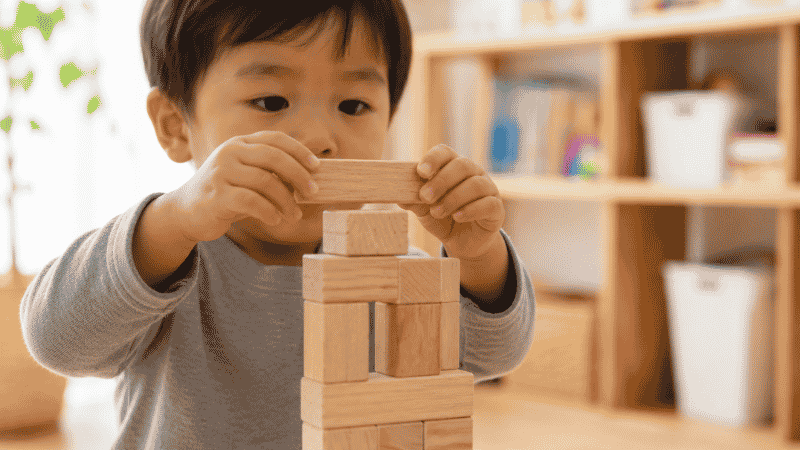
If you can only buy one “big” toy this year, make it Magna-Tiles. These magnetic building tiles are the rare toy that genuinely grows with your child. At three, they’re building flat shapes and simple houses. By five, they’re creating multi-level structures with ramps and windows. I’ve watched kids use these for years without losing interest, which almost never happens.
They’re pricey — a starter set runs $50–$70 — but they’re the kind of thing you buy once and still see out on the floor five years later. That’s an investment, not a splurge.
Safety note: Magna-Tiles’ magnets are safely enclosed in the tile edges. However, cheaper imitation sets sometimes have weaker enclosures — always check that magnets are fully sealed before purchasing any magnetic building toy for this age.
Unit Blocks (Wooden)
Old-fashioned, heavy, and completely brilliant. A set of quality wooden unit blocks is one of the best educational toys for 3 year olds on the market — and it has been since long before the word “educational” was a marketing term.
NAEYC research confirms that block play at this age develops mathematical thinking (proportion, symmetry, balance), spatial reasoning, and language — especially when a caregiver plays alongside and narrates. “You put the long one on the bottom — that’s the foundation” is a sentence that does more for early math skills than most educational apps.
Simple Marble Runs
By the later end of the 3-year-old range (around 3.5+), many children are ready for a basic marble run. Start with a set that has large pieces and relatively simple connections. Yes, there will be “Moooom, help!” moments at first. But when they finally get the marble to slide all the way down on their own, the look on their face is worth every minute of the floor-sitting.
Choose marble runs with marbles no smaller than 1.75 inches in diameter — standard-sized marbles are a choking hazard for children under 3.
The Thinkers: Puzzles and Games That Build Problem-Solving
Three is when puzzles become genuinely engaging rather than just frustrating. Their fine motor control has improved enough that they can manipulate small-ish pieces, and their cognitive patience — brief as it still is — allows them to work toward a goal.
Floor Puzzles (24–48 pieces)
A 24-piece floor puzzle is the sweet spot for early threes. By 3.5, many children are ready for 48-piece puzzles. Look for large-format puzzles (the kind that spread out on the floor) with chunky, well-fitting pieces. A puzzle that’s too loose or too tight creates frustration rather than the satisfaction that makes them want to come back.
Learning bonus: Doing puzzles together while narrating — “Where does the elephant’s trunk go? It curves down… do you see that piece?” — builds both spatial reasoning and language simultaneously.
First Board Games
Three is genuinely old enough for simple cooperative board games — ones where everyone wins or loses together. Games like Hoot Owl Hoot or Zingo are perfect because they build turn-taking, waiting, and prediction skills (what early childhood educators call executive function precursors) without the tears that come from competitive losing.
Avoid games with more than 5–6 rules. A 3-year-old’s working memory is still developing, and a complicated rulebook will guarantee a meltdown before the first round is finished.
The Movers: Active Play Toys for 3-Year-Olds Who Never Stop
Three-year-olds have energy reserves that seem genuinely impossible. If they don’t move enough during the day, sleep becomes a battle. The right outdoor toys for 3 year olds — and indoor options for rainy days — matter more than most parents realize.
Balance Bikes and Pedal Bikes
If your child isn’t already on a balance bike, start now. Three is an ideal age. Most children who start on a balance bike at 3 are confidently riding a pedal bike without training wheels by 4 or 4.5. Compare that to the traditional tricycle route, which often delays independent biking by years.
Look for a balance bike where the child’s feet can rest flat on the ground with a slight knee bend. Seat height is everything.
Scooters (3-Wheel for Early Threes)
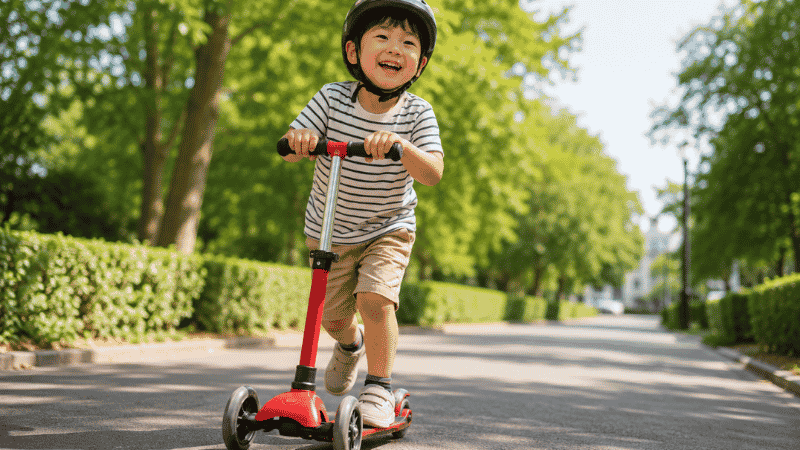
A three-wheel scooter (two wheels in front, one in back) is significantly more stable than a two-wheel version for this age. The Micro Mini Deluxe is widely recommended by parents and pediatric occupational therapists alike — its lean-to-steer design actually strengthens the core muscles and balance skills your child needs for everything else.
Indoor Climbing and Active Play
For rainy days and apartment living, a foam climbing set or small indoor slide gets that energy out safely. The Nugget (a modular foam couch/play structure) has earned its cult-parent following for a reason — it becomes a fort, a crash pad, a climbing wall, and a slide, all in the same afternoon.
The Creators: Art and Sensory Toys That Build Fine Motor Skills
Three is when art becomes intentional. Your child isn’t just scribbling — they’re drawing “a dog” (that looks like a circle with legs, but still — they meant it). This intentionality is huge, and the right creative tools support the fine motor skills they’ll need for writing in another year or two.
Crayons, Markers, and Large Paintbrushes
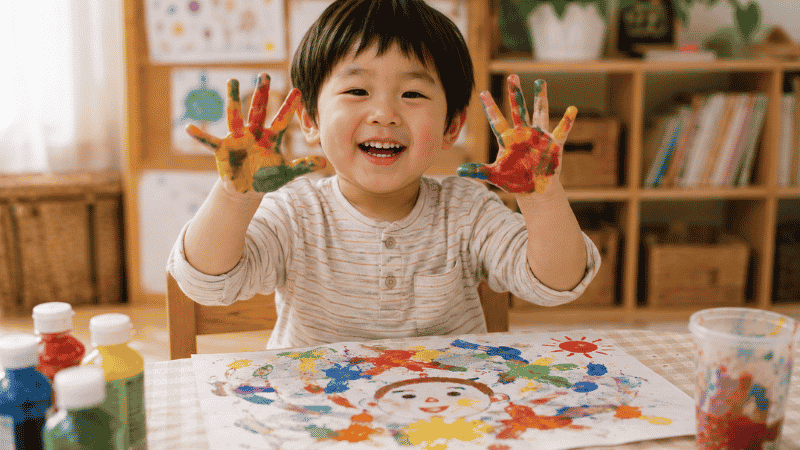
Choose thick, triangular crayons (easier to grip correctly), washable markers, and large paintbrushes. Let them make as big a mess as you can tolerate. The process is the point — not the product.
Play-Doh and Modeling Clay
Squeezing, rolling, pinching, and shaping clay builds the exact hand strength and fine motor coordination that prepares children for holding a pencil. Play-Doh is the classic for a reason: it’s soft enough for small hands, available in every color, and endlessly reusable.
Important: Check that any play dough or modeling clay is clearly labeled non-toxic. Homemade playdough with food coloring is a great alternative and completely safe for children who still mouth materials.
Safety at 3: What Changes and What Doesn’t
By three, your child’s oral exploration phase is mostly over — but “mostly” isn’t “completely.” Some 3-year-olds still mouth objects when tired, anxious, or bored. Here’s what to keep in mind:
What gets safer at 3:
- Small pieces (under 1.75 inches) are generally appropriate now, but use your judgment based on your specific child
- More complex puzzles and games with smaller components
- Arts and crafts with small materials (crayons, stamps, stickers)
What remains dangerous regardless of age:
- Powerful magnets (neodymium/rare earth magnets): If two are swallowed separately, they can attract through intestinal walls and cause life-threatening internal injuries. This is not a choking hazard — it’s a medical emergency. Avoid any toy with small, powerful magnets.
- Button batteries: Still require screwed-shut compartments. A 3-year-old is coordinated enough to pop open an unsecured battery cover.
- Latex balloons: A leading cause of choking death in children under 8. Always supervise balloon play.
- Toys with cords longer than 12 inches: Strangulation hazard.
Safety certifications to look for:
- ASTM F963 (U.S. toy safety standard)
- CPSC compliance (required for U.S. market)
- CPLA or EN71 for European-origin toys
What NOT to Buy: The 3-Year-Old Avoid List
Anything with more than 50 tiny pieces Unless you enjoy stepping on small objects barefoot at 2 AM, avoid toy sets designed around masses of tiny components. At three, more pieces doesn’t mean more learning — it means more tears when half of them go missing under the couch.
Electronic learning tablets (at this age) The American Academy of Pediatrics recommends limiting screen use to 1 hour per day of high-quality content for ages 2–5. A dedicated learning tablet from a toy brand is still a screen. At three, hands-on, open-ended toys produce measurably better developmental outcomes than screen-based equivalents.
Toys that are “almost” age-appropriate If a toy is rated 4+, there’s usually a reason — either complexity, small parts, or developmental expectations the toy requires. Buying up an age range to challenge your child often just creates frustration. Trust the safety labels; they’re regulatory guidelines, not marketing suggestions.
Anything you can’t stand the sound of This is practical wisdom, not a developmental guideline. A toy that plays the same 8-note melody on repeat will affect your sanity in ways that are difficult to overstate. If it doesn’t have a volume control or an off switch, leave it on the shelf.
If You Only Have 10 Minutes: The Quick-Pick Summary
Not everyone has time to read a full guide before a birthday party next Saturday. Here’s the shortcut:
Best overall: Magna-Tiles 32-Piece Classic Set Best for imaginative play: Melissa & Doug Wooden Play Kitchen Best for active kids: Micro Mini Deluxe Scooter Best budget gift: Melissa & Doug Unit Blocks Best for quiet time: 24-piece floor puzzle (Ravensburger or Melissa & Doug) Best first board game: Hoot Owl Hoot (cooperative, no losers) Best creative toy: Play-Doh 10-pack with simple tools
All of these are widely available, consistently well-reviewed by parents and child development professionals, and priced in a range that makes sense for a gift or an everyday toy.
Frequently Asked Questions
What are the best gifts for 3 year old boys? The “boys vs. girls” toy distinction matters much less than you might think at this age. Three-year-old boys benefit enormously from pretend play (doctor kits, play kitchens, dolls), building toys, active play equipment, and creative arts. The best gifts for 3 year old boys are the ones that match their current interests — whether that’s dinosaurs, construction, cooking, or something else entirely.
What are the best gifts for 3 year old girls? Same answer, honestly. The best gifts for 3 year old girls are toys that spark imagination, support physical development, and invite creative problem-solving. Avoid defaulting to princess-only themes — most 3-year-old girls are just as enthusiastic about building, climbing, and solving puzzles as any other category.
How many toys does a 3-year-old need? Research from Zero to Three consistently shows that a smaller, curated collection of engaging toys produces richer, longer play than a room overflowing with options. Aim for 6–10 accessible toys at a time and rotate others in storage. “New” (to them) toys that reappear after a few weeks get played with like they’ve never been seen before.
Are Montessori toys better for 3-year-olds? Montessori-aligned toys (open-ended, natural materials, child-led) tend to score well on longevity and developmental value. But “Montessori” has become a marketing label — always look at the actual toy rather than the label. A simple set of wooden unit blocks is more Montessori in spirit than an expensive wooden toy that only does one thing.
What preschool toys do teachers actually recommend? Ask any preschool teacher what they’d put in a classroom, and they’ll consistently say: blocks (unit or Duplo), play dough, puzzles, art supplies, dramatic play props (kitchen, doctor kit, dress-up), and books. None of these are complicated or particularly expensive. The toy industry sometimes makes this feel harder than it is.
My 3-year-old won’t play with any of their toys. What’s wrong? Usually, nothing is wrong with the child. Three-year-olds often need a play partner to get started — once you sit down and begin playing, they’ll join. Try playing with the toy yourself and narrating what you’re doing. The “you’re doing it wrong” instinct will kick in immediately and get them involved every single time.
When should I be concerned about my 3-year-old’s play development? Talk to your pediatrician if your 3-year-old rarely engages in pretend play, has difficulty using toys for their intended purpose, shows no interest in playing with other children, or loses skills they previously had. These can be early signs of developmental differences that benefit from early support — and the earlier, the better.
The Bottom Line
Finding the best toys for 3 year olds comes down to one question: does this toy invite my child to do something, or does it just do something at them?
Pretend play props, building sets, simple puzzles, art supplies, and active play equipment all put your child in the director’s chair. They’re the ones telling the story, solving the problem, and creating the outcome. That’s where real development — cognitive, emotional, social, physical — actually happens.
You don’t need to spend a fortune. You don’t need to buy the most educational-looking thing on the shelf. You just need to understand where your child is right now, choose something that meets them there, and then — whenever you can — get on the floor and play with them.
That last part is still the best toy you have.
Looking for what comes next? Read our guide to the Best Toys for 2-Year-Olds or jump ahead to our Best Toys for 4-Year-Olds when your preschooler is ready for more. And if a birthday is coming up, our Gift Guides have you covered by age and budget.
References
- Centers for Disease Control and Prevention (CDC). (2023). Developmental Milestones: 3 Years. https://www.cdc.gov/ncbddd/actearly/milestones/milestones-3yr.html
- American Academy of Pediatrics (AAP). (2024). The Power of Play: A Pediatric Role in Enhancing Development in Young Children. https://www.healthychildren.org
- National Association for the Education of Young Children (NAEYC). (2024). Good Toys for Young Children by Age and Stage. https://www.naeyc.org/resources/topics/play/toys
- Zero to Three. (2025). Best Toys for Babies and Toddlers. https://www.zerotothree.org/resource/best-toys-for-babies-toddlers/
- U.S. Consumer Product Safety Commission (CPSC). Toy Safety. https://www.cpsc.gov/Safety-Education/Safety-Guides/Toys
- University of Colorado Boulder. (2022). Pretend Play and Executive Function Development in Early Childhood. Referenced in child development literature.