Let’s be real: your living room probably looks like a toy graveyard. We’ve all been there—buying that flashy, expensive “educational” gadget only to watch our kids play with the cardboard box it came in. The truth is, the secret to raising a sharp, analytical thinker isn’t about the number of things you buy; it’s about logic-based toy selection.
At Toizora, we believe every object in your child’s hand should serve a purpose. By mastering these 5 toy categorization dimensions, you can stop the mindless spending and start building a playroom that actually develops child logic development and critical thinking.
1. Cause-and-Effect: From “What?” to “How?”
The first pillar of child logic development is understanding that one action leads to another.
- Level 1: Press a button, hear a sound. (Good for toddlers).
- Level 2: Gear sets and marble runs. (Essential for 2026 preschoolers). When a child realizes they can control a sequence of events, they aren’t just playing—they’re learning the basics of coding and physics.
2. Spatial Deconstruction: Mastering 3D Thinking
Don’t just look for “blocks.” Look for toys that challenge spatial awareness. This dimension moves a child from 2D recognition (flat puzzles) to 3D architecture.
- Pro Tip: Look for magnetic tiles or asymmetric balancing blocks. These force a child to visualize the “structural integrity” of their creation.
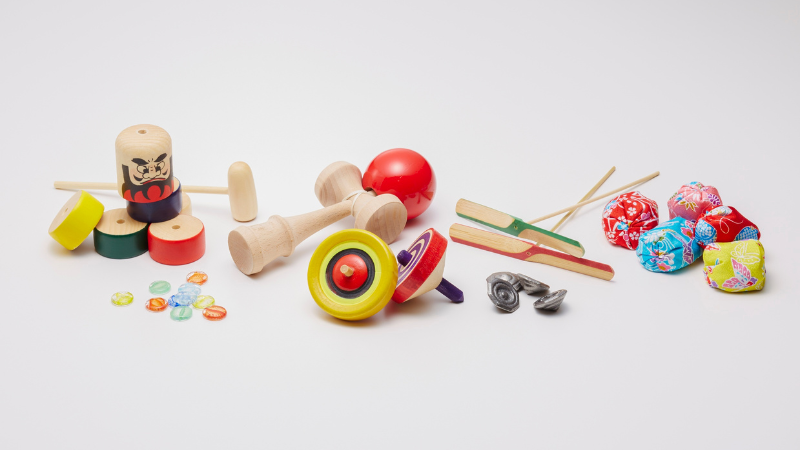
3. The Open-Ended Score: Beyond the Instruction Manual
In 2026, “unstructured play” is the ultimate luxury. High-logic toys have a high “open-ended score.”
- Low Score: A toy that only does one thing (like a talking doll).
- High Score: A rainbow stacker or a set of silk scarves. These toys don’t tell the child how to play. Instead, the child has to invent the logic, which is a massive workout for the prefrontal cortex.
4. Fine Motor Precision: The Brain’s Hardware
You can’t have logic without execution. Sorting beads, using wooden tweezers, or threading laces are “hardware” tasks. According to the American Academy of Pediatrics (AAP), simple, hands-on toys are far superior to digital apps for early developmental milestones.
5. Algorithmic Play: Understanding Rules and Sequences
This is where logic-based toy selection gets exciting. Simple board games or “sorting bins” introduce the concept of algorithms—a set of rules to follow to reach a goal.
- Try this: Ask your child to sort their cars not by color, but by “speed” or “weight.” This shifts their brain from simple observation to complex categorization.
The Toizora Logic Matrix: Are You Buying the Right Stuff?
Use this table next time you’re browsing the Toizora shop to ensure a balanced brain-diet for your little one:
| If your child… | They might be missing… | Try this category: | Goal: |
| Gives up easily | Spatial Deconstruction | Progressive Puzzles | Persistence |
| Plays aimlessly | Algorithmic Play | Sorting & Matching Kits | Sequential Logic |
| Only follows rules | Open-Ended Toys | Wooden Blocks / Clay | Originality |
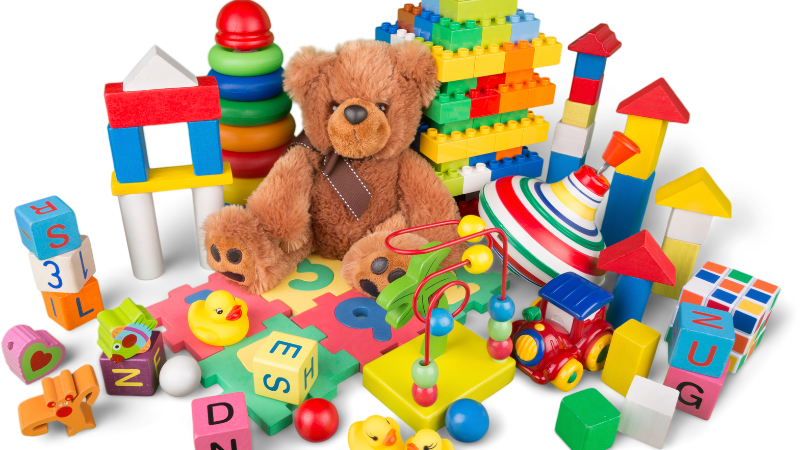
How to Audit Your Playroom Tonight
You don’t need to throw everything away. Just reorganize. Pick 10 toys that fit at least two of the dimensions above. Put the rest in a “rotation bin.” When your child has fewer choices but higher-quality toy categorization, their focus time triples. Guaranteed.
FAQ: Picking the Best Logic Toys
Q: Are digital “logic apps” as good as physical toys? Not even close. Physical toys provide tactile feedback that helps the brain “map” the real world—something a screen simply can’t do.
Q: My child only likes one type of toy. Is that bad? Not necessarily! If they love cars, use cars to teach all 5 dimensions. Use them for counting (logic), ramps (physics), and sorting (algorithms).
Q: Where can I find toys that meet these 5 criteria? Check out our [Toizora Logic & Growth Collection]. We’ve done the vetting, so you don’t have to.