
If you’ve walked through a toy aisle lately, you’ve seen the “STEM” label slapped on everything from high-tech robots to basic wooden blocks. In 2026, it feels like every piece of plastic claims to turn your kid into a future engineer, but as a parent, I know most of it is just “educational washing.”
We want toys that actually build our children’s brains, not another expensive gadget that sits in the closet after the batteries die on day two.
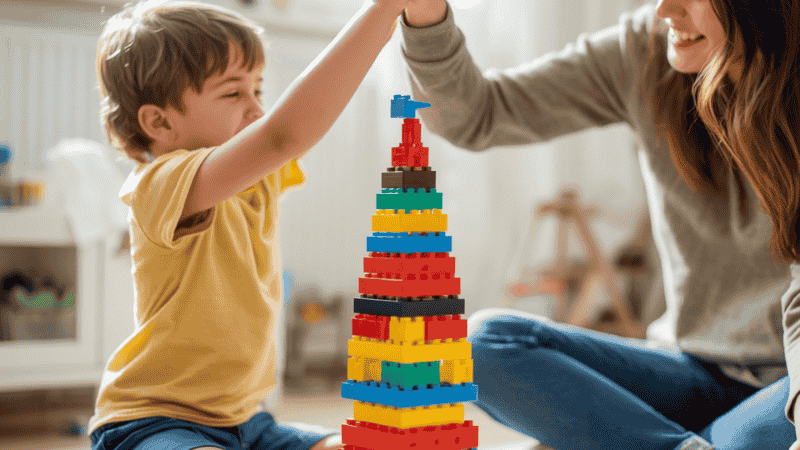
The truth? A great STEM toy isn’t about teaching a five-year-old to write complex code while you hover over them. It’s about that moment when they try to build a bridge, it collapses, and instead of having a meltdown, they actually stop to figure out why.
Whether you’re trying to sneak some math into playtime or just want a birthday gift that won’t be forgotten by next week, here’s what I’ve learned about what actually works.
What Most Toy Guides Get Wrong
Most “Best STEM Toys” lists are just a gallery of whatever is currently trending on Amazon. They tell you a toy is great because it has 5,000 reviews, but they don’t tell you that the app crashes every ten minutes or that the “science experiment” is just a mess with no real lesson.
At Toizora, we look for longevity. If a toy only has one “solution,” it’s not a STEM toy—it’s a puzzle. Real STEM happens when there are a hundred ways to fail and a hundred ways to succeed. We also prioritize “Parent Sanity”—if a toy takes two hours to calibrate, it doesn’t make our list.
STEM by Age: From Sensory to Software
The biggest mistake I’ve made—and I’ve made it often—is buying a toy that’s “too smart” for where my kid is at. I once bought a high-end microscope for a four-year-old; it ended up being used as a very expensive hammer for his play-dough.
The Toddler Years (Ages 2-4): Pre-STEM
At this age, “STEM” is really just code for “cause and effect.” They don’t need a tablet; they need to see that when they pour water from a wide cup into a skinny one, the level goes up.
Early Elementary (Ages 5-8): The “How” Phase
This is the golden age of “Watch this, Mom!” Kids are finally ready for “logic-based” games where they have to think two steps ahead. Their attention span is growing, but they still need a “win” every 15 minutes to stay engaged.
Upper Elementary and Beyond (Ages 9+): Real Application
Now, they finally have the fine motor skills for robotics kits with actual wires or chemistry sets with real reactions. They can sit still for an hour to follow a multi-step manual, provided the end result is cool enough to show their friends.

Toizora’s Battle-Tested Recommendations
Best Overall: Magna-Tiles Classic 100-Piece Set
If I could only keep one toy in my house, it would be magnetic tiles.
- Why it works: It’s one of the few toys that actually grows with them. My 3-year-old builds “parking garages,” while my 8-year-old builds elaborate 3D space stations.
- The “Parent Win”: They take about two minutes to clean up. You just stack them and go.
Best for Toddlers: Duplo My First Number Train
While not a “high-tech” kit, this is the perfect introduction to sequencing and math.
- Why it fits: It’s indestructible and teaches basic counting without the child even realizing they are “learning.”
- Internal Link: Best LEGO Sets for 4-Year-Olds
Best for Learning: Thames & Kosmos Chem C2000
Look, skip the “vinegar and baking soda” volcano kits. If your kid is actually interested in science, get them a real lab.
- The Reality Check: This set is the real deal—250 experiments and professional equipment.
- The “Together” Factor: This is a “Sunday afternoon with Dad/Mom” project. If you leave a 10-year-old alone with this, your dining table will never be the same.
Best Budget Option: National Geographic Magnetic Marble Run
Gravity and physics don’t have to cost $100. This set turns your fridge into a vertical laboratory.
- Why it fits: Since it’s on the fridge, it doesn’t take up floor space. It’s perfect for keeping a kid busy while you’re trying to actually get dinner on the table.

The Benefits: Why “STEM” Actually Matters
We don’t buy these toys just to pad a resume. We buy them to build Resilience.
Most toys are “fail-proof,” which is actually kind of boring. In STEM play, the “fail” is the best part. When the marble run won’t stay up or the robot keeps hitting the wall, the child has to stop, analyze, and try again. That “Trial and Error” loop is exactly how they learn to handle frustration in the real world.
For kids who prefer building models over running experiments, check out our guide on LEGO Ideas sets for advanced building techniques.
Safety: The Stuff Nobody Tells You
Age Safety & Choking Hazards
Most STEM kits for ages 8+ contain tiny components like resistors, jumpers, or small magnets.
- Warning: These are lethal if swallowed. Always keep “big kid” kits in a latched bin out of reach of toddlers.
- Magnet Safety: If a kit uses high-powered magnets, ensure they are encased in plastic (like Magna-Tiles) to prevent accidental ingestion.
Chemical & Material Safety
- Science Kits: Check for the ASTM D-4236 certification. This ensures the materials have been evaluated by a toxicologist.
- The Tray Method: I always recommend using a cheap plastic boot tray as a “lab station.” It keeps spills contained and protects your furniture from permanent stains.
The Mistakes: 3 Signs a Toy is a Waste of Money
- The “One-and-Done” Kit: If the box only lets you do one specific thing, it’s going to be in the trash by tomorrow.
- The “App-Dependency” Trap: If the toy requires a tablet to turn on, walk away. Apps go out of date; plastic bricks don’t.
- The “Too Complicated” Manual: If I have to spend an hour reading a manual before my kid can even touch the toy, their interest is already gone.
FAQ: Questions I Get Asked at Playdates
1. Do STEM toys actually make them smarter? It builds “fluency.” A kid who plays with gears and magnets won’t be scared of a physics textbook later. It makes abstract concepts feel like things they’ve already touched.
2. Can they really learn to code without a screen? Yes! Coding is just logic (If/Then statements). You can teach that with a deck of cards or a board game like Robot Turtles.
3. My kid hates math. Should I bother? Honestly, these toys are best for kids who hate math. Seeing a gear turn makes those boring numbers on a worksheet finally mean something.
4. What is the best brand for STEM in 2026? Brands like Learning Resources and Thames & Kosmos continue to lead, but keep an eye on “open-source” kits that allow for more creative freedom.
Parenting Reality Check: You don’t need a $300 robotics kit to be a “good parent.” Sometimes the best STEM toy in the house is a pile of cardboard boxes, some duct tape, and a challenge to build a fort that won’t collapse. The “STEM” happens in the thinking, not the price tag.