
Walk into any big-box retailer, and the toy aisle is a neon-colored fever dream. As parents, we’ve all been there—standing paralyzed by choice, wondering if that “educational” robot is actually a $50 paperweight. The truth? The best age-appropriate toys aren’t just about entertainment; they are tools that synchronize with your child’s rapidly firing neurons.
If a toy is too advanced, it breeds frustration. Too simple, and it’s forgotten by lunch. At Toizora, we believe in the “Goldilocks Zone” of play. This 2026 guide breaks down the essential developmental milestones and the specific playthings that turn those “aha!” moments into lifelong skills.
The Golden Rule: Safety First, Play Second
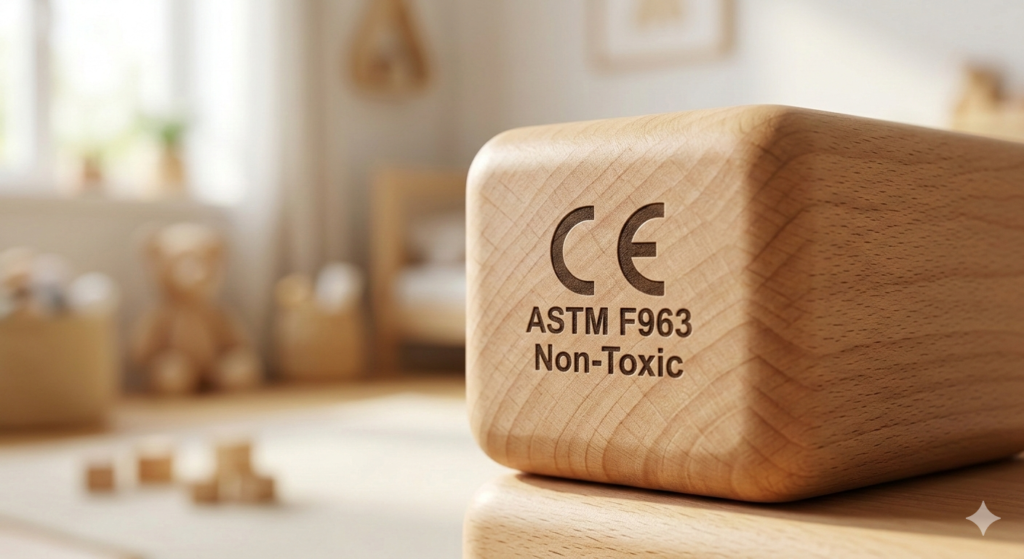
Before we dive into the fun stuff, let’s talk shop. Whether it’s a teething ring or a chemistry set, toy safety guidelines are non-negotiable. Always look for the ASTM F963 (US) or EN71 (EU) certifications. In our testing lab, we pay extra attention to “choking hazards” for the under-3 crowd and ensure all finishes are lead-free and non-toxic.
0–12 Months: Sensory Roots and Motor Basics
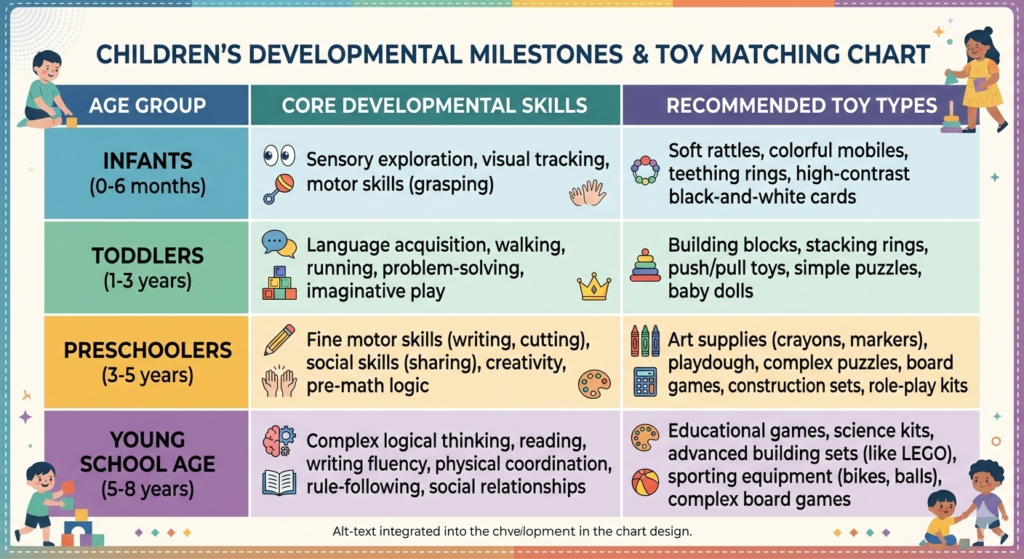
In the first year, your baby is a sensory sponge. They aren’t “playing” in the traditional sense; they are mapping their world through touch, sight, and sound.
- The Milestones: Tracking objects with eyes, reaching/grasping, and eventually the “pincer grasp.”
- The Must-Haves: High-contrast black and white cards, soft textured balls, and natural rubber teethers.
- Expert Tip: Around the 6-month mark, introduce toys that respond to their actions—like a rattle that makes noise when shaken. This teaches “cause and effect,” the very first step of scientific thinking.
1–3 Years: Fine Motor Skills and Language Bursts
This is the era of the “Little Explorer.” Toddlers are obsessed with how things fit together (and how fast they can pull them apart).
- The Milestones: Walking, stacking blocks, and a massive vocabulary explosion.
- Top Picks: Giant building blocks, “sorting” buckets, and simple musical instruments.
- Developing Fine Motor Skills: Look for toys that require “precision” without being impossible. Peg puzzles and chunky lacing beads are fantastic for prepping those tiny hands for writing later on.
3–6 Years: The Rise of Logic and STEM Education
By age three, play becomes “work.” Children start engaging in imaginative role-play and begin to understand basic logic. This is the prime time to introduce STEM education concepts through play.
- The Milestones: Collaborative play, following 3-step directions, and spatial reasoning.
- The Strategy: Transition to “Open-Ended Toys.” Items like magnetic tiles or basic marble runs are superior because there is no “right” way to play. They encourage the American Academy of Pediatrics’ (AAP) recommendation for child-led, creative play over passive screen time.
2026 “No-Buy” List: Avoid the Toy Clutter
Not all toys are created equal. In 2026, we are seeing a surge in “over-digitized” toys. If a toy does all the talking, moving, and thinking for the child, the child isn’t learning.
- Skip: Plastic “one-trick ponies” that only play one song.
- Choose: Versatile kits that grow with the child (e.g., a block set that starts as a tower and becomes a castle).
FAQ: Picking the Perfect Fit
Q: My 2-year-old is playing with toys meant for 4-year-olds. Is that okay? A: If there are no small parts (safety first!), it’s fine to follow their lead. However, ensure they aren’t getting frustrated. Confidence is as important as the skill itself.
Q: How many toys does a child actually need? A: Research suggests “Toy Rotation” is better than “Toy Abundance.” Keep 5-8 toys out and rotate them every two weeks to keep engagement high.