
We’ve all had that “Christmas Morning Hangover.” You spend a small fortune on the latest flashing, beeping gadget, only to find it buried under the sofa three days later, batteries dead and interest gone. It’s frustrating, expensive, and—let’s be honest—a total waste of living room real estate.
At Toizora, we’re obsessed with long-lasting toys for kids. We’re talking about those “unicorn” playthings that stay relevant from the toddler waddle all the way to elementary school. These aren’t just toys; they’re investments in open-ended play. By choosing age-appropriate toys with a high “play value,” you aren’t just saving money—you’re sparking a level of creativity that a single-button plastic robot simply can’t match.
What Makes a Toy “Long-Lasting”?
Before we hit the list, let’s define the “Stay-Power” formula. A toy lasts for five years if it checks three boxes:
- Durability: It survives a tumble down the stairs.
- Versatility: It can be a castle today and a spaceship tomorrow.
- Scalability: It challenges a 2-year-old’s motor skills and a 6-year-old’s logic.
2026 Rankings: The Top 10 Toys That Grow With Your Child
1. Magnetic Tiles: The Ultimate Shape-Shifter
If you buy only one thing this year, make it magnetic tiles. For a toddler, it’s about the “click” and the “crash.” For a first-grader, it’s about architectural integrity and 3D geometry.
- Why it lasts: It bridges the gap between simple stacking and complex STEM learning.
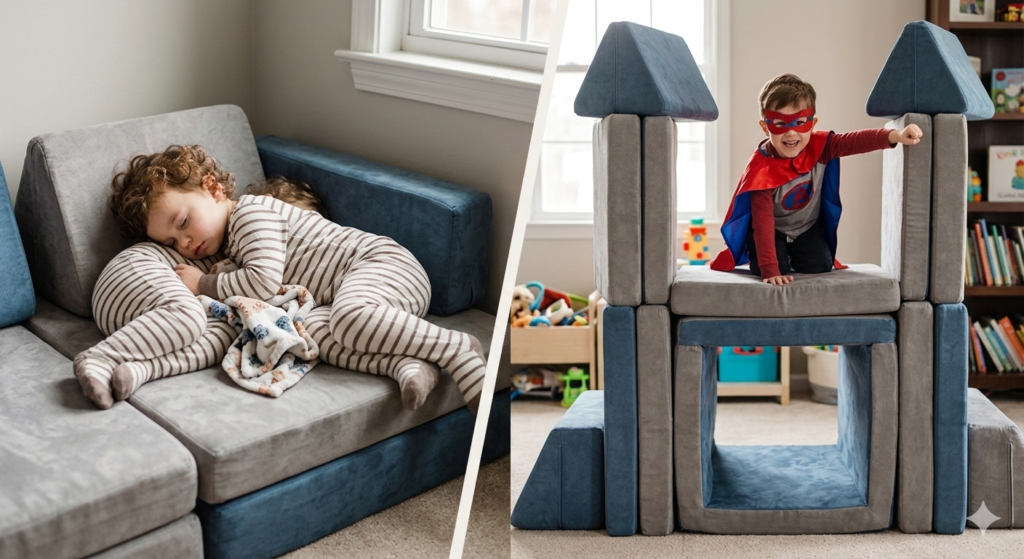
2. The Modular Play Couch
It’s a sofa, it’s a fort, it’s a giant taco. Modular foam furniture is the king of “gross motor” play that survives the transition from nursery decor to “gamer lounge” accessory.
3. Solid Wood Unit Blocks
Plastic breaks; wood endures. A high-quality set of unit blocks is the bedrock of imaginative play.
- Expert Tip: Mix these with your existing toy cars or animal figurines to create entire miniature cities.
4. Open-Ended Building Bricks (The Classics)
We’re talking about the small bricks that have defined childhood for decades. They are the gold standard for age-appropriate toys because the only limit is the child’s imagination.
Data-Driven Choice: Fast Toy vs. Investment Toy
| Feature | Trend-Based “Fast” Toy | Investment “Long-Lasting” Toy |
| Average Play Life | 3 – 6 Months | 4 – 7 Years |
| Play Style | Passive (Watching) | Active (Creating) |
| Resale Value | Low / None | High (50-70% of MSRP) |
| Educational Impact | Low | High (Problem Solving/STEM) |
Maximize the Life of Your Toys
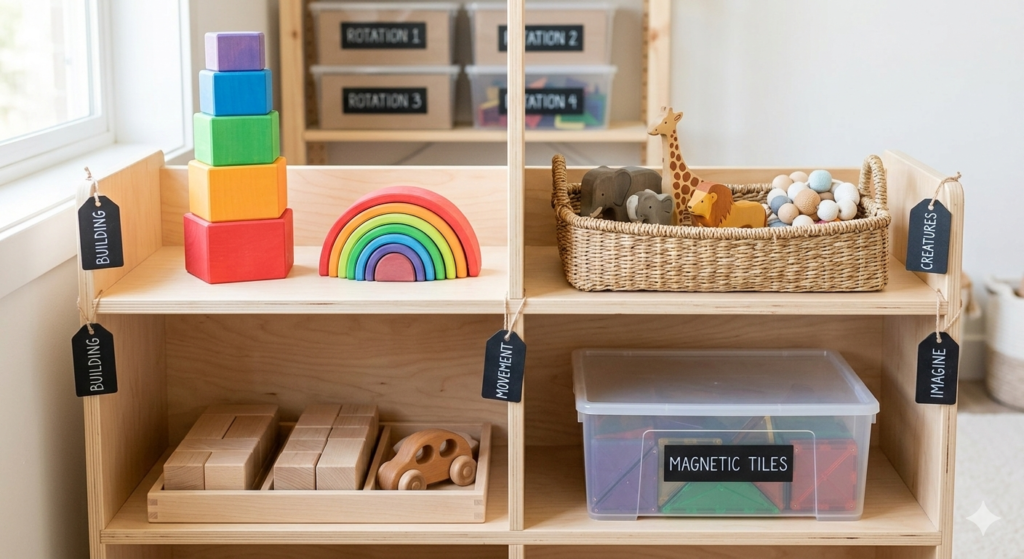
Even the best toy needs a strategy. We highly recommend the Toy Rotation Method. By only keeping 25% of their collection accessible at once, you maintain the “novelty factor” without buying anything new.
According to the Child Development Institute, having fewer toys available at one time actually encourages deeper play and longer attention spans. It’s about quality over quantity, every single time.
FAQ: Smart Shopping for Parents
Q: Are expensive toys always “long-lasting”? A: Not necessarily. Many expensive electronic toys have a very short shelf life. Focus on materials (wood, silicone, high-grade ABS) and “open-endedness” rather than the price tag.
Q: How do I know if my kid is ready for “older” toys? A: Safety first! Check the small-parts warning. If it’s safe, let them try. A 3-year-old might not build a motorized Lego car, but they’ll love sorting the colors.